







What's Happening?
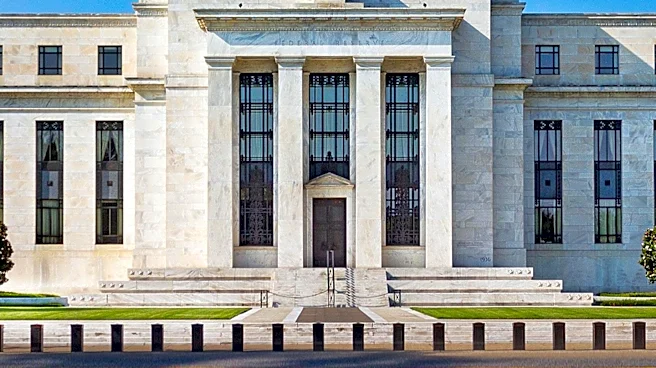
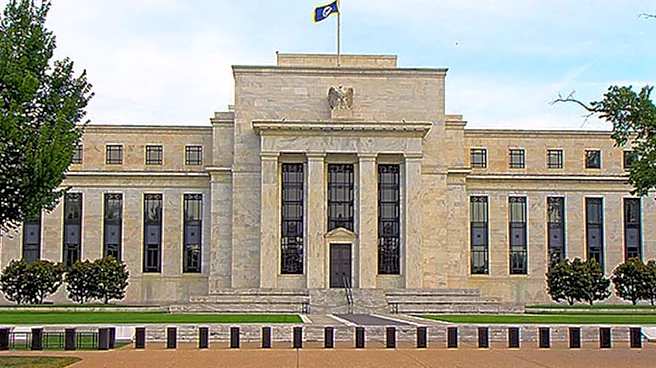
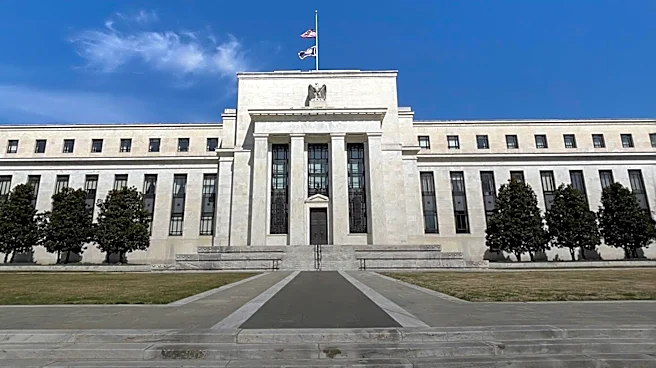
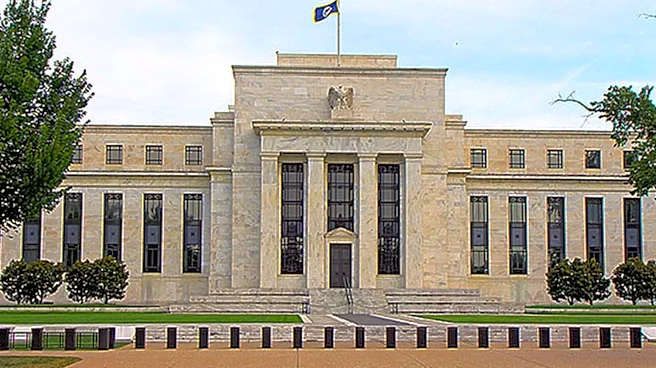
The Federal Reserve, under the new leadership of Chair Kevin Warsh, has decided to keep the benchmark federal funds rate unchanged at a range of 3.5% to 3.75%. This decision was made during the June meeting of the Federal Open Market Committee (FOMC),
reflecting concerns over rising inflation. The minutes from the meeting reveal that while there was no immediate need to adjust rates, there was significant discussion about potential future rate cuts or hikes. The FOMC noted scenarios where inflationary pressures might ease, suggesting that maintaining or lowering rates could be appropriate. Conversely, if inflation remains elevated due to factors like AI-related demand or geopolitical tensions, policy firming might be necessary. The meeting also included a revised economic projection, with PCE inflation expected to rise to 3.6% by the end of the year.
Why It's Important?
The Federal Reserve's decision to hold interest rates steady is significant as it reflects the central bank's cautious approach amid economic uncertainties. Inflation has been a growing concern, driven by factors such as energy price shocks and global economic tensions. The Fed's stance impacts various sectors, including housing, consumer spending, and business investments, as interest rates influence borrowing costs. The decision also signals the Fed's readiness to adapt its policy based on evolving economic conditions, which could affect market stability and investor confidence. Stakeholders, including businesses and consumers, are closely watching the Fed's actions for indications of future economic trends.
What's Next?
Looking ahead, the Federal Reserve will continue to monitor economic indicators to determine the appropriate course of action. The FOMC's future decisions will depend on inflation trends, labor market conditions, and other economic factors. The release of the 'dot plot' suggests that some members anticipate potential rate hikes by the end of 2026, indicating a cautious but flexible approach. The Fed's communication strategy, particularly under Warsh's leadership, may also evolve, with a focus on reducing forward guidance. This could lead to more concise post-meeting statements, impacting how financial markets interpret the Fed's policy intentions.