





What's Happening?
A new trend featuring garden-inspired footwear, characterized by lug soles and practical designs, has become prominent on recent fashion runways for the fall/winter 2026 season. Designers such as Miu Miu, Loewe, and Dior showcased their interpretations
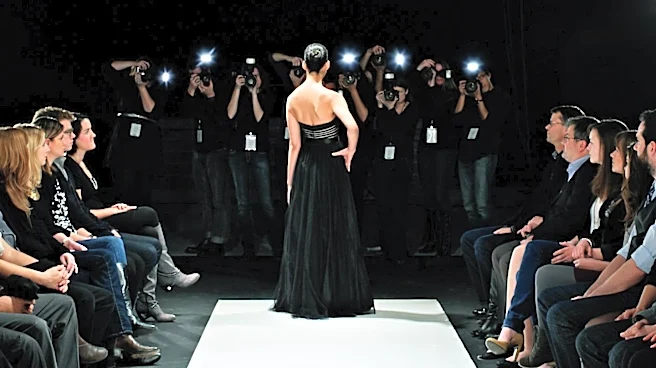
of garden clogs and chunky, utilitarian boots. Miu Miu's fall/winter 2026 collection featured models walking on a mossy runway in bubble-soled slip-ons and lace-up boots, paired with technical nylon jackets. Loewe presented slip-on shoes with rubberized toes styled with lush shearling and neon orange latex dresses. Dior's spring/summer 2027 show in Paris included brown suede shoes with rubberized toes and practical soles, worn with silk petal jackets. This trend marks a shift towards more grounded and practical footwear, contrasting with the elaborate and experimental designs seen in previous seasons, such as Schiaparelli's faux-taxidermy kitten heels or Prada's feather-covered boots.
Why It's Important?
The emergence of garden shoes on high-fashion runways signifies a broader shift in consumer preferences and design philosophy within the U.S. fashion industry. This trend reflects a growing appreciation for practicality and comfort, potentially influencing mainstream footwear choices. For retailers and brands, understanding this shift is crucial for inventory planning and marketing strategies. The adoption of 'ugly-chic' aesthetics combined with functionality suggests that consumers may be prioritizing versatile and durable items over purely decorative ones. This could lead to increased demand for footwear that blends outdoor utility with fashion-forward design, impacting manufacturers and designers to innovate in materials and construction. The trend also highlights a potential desire for connection to nature and a more down-to-earth aesthetic in an increasingly digital world, influencing broader lifestyle and purchasing decisions.
What's Next?
The continued presence of garden-inspired footwear on runways suggests that this trend may evolve and integrate further into mainstream fashion. Consumers can expect to see more variations of lug-soled shoes, practical clogs, and utilitarian boots from both high-end designers and mass-market brands. Retailers will likely expand their offerings to include these styles, potentially leading to collaborations between fashion houses and outdoor footwear brands. The trend could also influence other categories, such as apparel, with a greater emphasis on durable, functional, and nature-inspired clothing. Fashion forecasters will be observing how long this 'grounded' aesthetic persists and whether it leads to a more permanent shift in footwear design away from purely ornamental styles towards those that balance aesthetics with practicality. The upcoming fashion weeks will be key in determining the longevity and evolution of this trend.
Beyond the Headlines
This trend of garden shoes on the runway reflects a deeper cultural commentary on the intersection of fashion, utility, and environmental consciousness. In an era where sustainability and practicality are increasingly valued, the embrace of 'garden shoes' can be seen as a symbolic rejection of excessive consumerism and a move towards more mindful consumption. It challenges traditional notions of luxury, suggesting that true value can be found in durability and functionality rather than just opulence. Ethically, this shift could encourage brands to explore more sustainable materials and production methods for footwear that is designed to last. Culturally, it taps into a desire for authenticity and a connection to the natural world, offering a sartorial escape from the complexities of modern life. This trend may signal a long-term shift in fashion towards a more pragmatic and environmentally aware aesthetic.