




What's Happening?
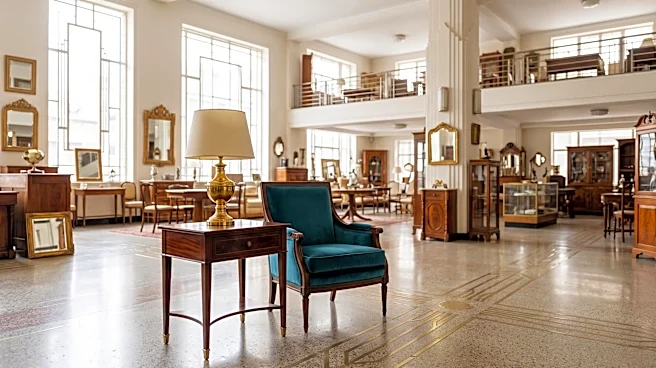
The Broadway Antique Market, a prominent antique store in Chicago's Edgewater neighborhood, is up for sale after nearly three decades of operation. Co-owners Duane Cerny, 67, and Jeff Nelson, 65, are seeking to retire and have listed both the business
and its 21,000-square-foot art deco building at 6130 N. Broadway for $2.5 million. The decision to sell was largely influenced by a significant increase in property taxes, which jumped from approximately $75,000 in 2023 to over $100,000 in 2024 following a county reassessment. Cerny stated that the rising tax burden made continued operation unsustainable. The store, which houses over 50 independent dealers, has been a local institution, attracting a diverse clientele including collectors, tourists, and set designers for film and TV productions. Cerny and Nelson plan to keep the store open through the winter holidays.
Why It's Important?
The sale of Broadway Antique Market signifies the potential loss of a long-standing cultural and commercial landmark in Chicago's Edgewater neighborhood. Its closure would impact over 50 independent dealers who operate within the market, potentially displacing their businesses and affecting their livelihoods. The store's unique inventory and art deco building have contributed to the neighborhood's character and attracted visitors, making it a significant local attraction. The primary reason for the sale—escalating property taxes—highlights a broader economic challenge faced by small businesses and property owners in urban areas. This situation underscores how rising operational costs, particularly property taxes, can force established businesses to close, leading to a loss of local heritage and unique retail experiences. The potential redevelopment of the site also raises concerns about preserving the building's distinctive architectural features and the overall aesthetic of the neighborhood.
What's Next?
Duane Cerny and Jeff Nelson intend to keep Broadway Antique Market open through the upcoming winter holidays, continuing to stock new items until the end of their tenure. They are hoping for a buyer who will acquire both the business and the property, ideally one who values the building's historical and architectural significance. However, the online listing for the property also highlights its 'redevelopment potential,' suggesting that if a buyer for the business does not emerge, the site could be redeveloped. The building, constructed in 1939, is classified by the city as having 'potentially significant architectural or historical features,' which would subject any future demolition plans to a 90-day delay while city officials explore preservation options. The future of the building and the space it occupies remains uncertain, with potential outcomes ranging from continued operation as an antique market to complete redevelopment.
Beyond the Headlines
The situation with Broadway Antique Market reflects a broader tension between urban development, rising property values, and the preservation of local character and small businesses. Edgewater has experienced significant property value increases and upzoning, allowing for taller, denser buildings. While this can signal economic growth, it often puts immense pressure on long-standing businesses and historic properties through increased taxation. The potential loss of an institution like Broadway Antique Market raises questions about the balance between progress and preservation, and the role of local government in supporting small businesses against the backdrop of a rapidly changing urban landscape. The store's unique role in providing eclectic decor for homes and even film sets underscores its cultural contribution, which extends beyond mere commerce. Its disappearance would represent a loss of a distinct retail experience and a piece of Chicago's commercial history, highlighting the challenges of maintaining unique local businesses in gentrifying neighborhoods.