






What's Happening?
Mazda North American Operations has announced record sales figures for the U.S. market during the first half of its 2027 fiscal year, which concluded on September 30, 2026. U.S. sales increased by 3% to 216,000 units, marking the highest sales volume
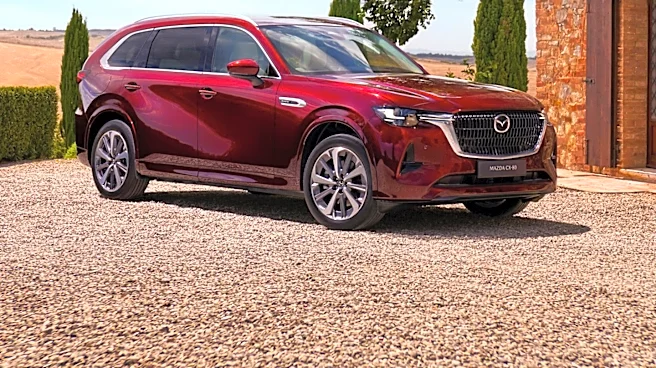
for this period in the company's history. This growth contributed to Mazda Motor Corporation's overall return to profitability, with net sales reaching JPY 2,688.1 billion globally, a 20.1% year-on-year increase. The new-generation CX-5 model played a significant role in this success, with its sales growing by 4% year-on-year, solidifying its position in the compact crossover SUV (C-CUV) segment. Globally, Mazda's retail sales rose by 1.2% to 617,000 units, and consolidated wholesale volume increased by 8% to 584,000 units. The company reported an operating income of JPY 59.124 billion, a significant turnaround from an operating loss in the same period last year.
Why It's Important?
The strong performance of Mazda North American Operations in the U.S. market is crucial for Mazda's global financial health and strategic positioning. The U.S. remains Mazda's largest market, and sustained growth here directly impacts the company's ability to invest in new technologies, product development, and market expansion. The success of the CX-5 indicates a strong consumer preference for Mazda's offerings in the highly competitive SUV segment, which is a key driver of sales in the U.S. automotive market. This positive sales trend could lead to increased market share for Mazda in North America, potentially influencing pricing strategies and competitive dynamics among other automotive manufacturers. Furthermore, Mazda's return to overall profitability, bolstered by U.S. sales, provides financial stability, allowing the company to navigate external uncertainties such as geopolitical risks, supply chain pressures, and fluctuating raw material costs more effectively.
What's Next?
Mazda plans to maintain its full-year outlook for FY2027, forecasting net sales of JPY 5,500 billion and an operating profit of JPY 150 billion. The company's strategy for the second half of the fiscal year will focus on further improving sales and profitability through new product introductions, cost reduction initiatives, and disciplined investment. The new CX-5, Mazda6e, and CX-6e models are expected to be central to increasing wholesale volumes. Mazda also intends to refine its pricing and model mix while carefully managing sales incentives. Efforts to reduce costs will continue through collaborations with suppliers, such as working with Nippon Steel to reduce body steel weight and with Yazaki to cut wiring harness variants. The company will also closely monitor external risks, including currency movements and tariff policies, to adapt its strategies as needed.
Beyond the Headlines
Mazda's robust performance in the U.S. market, particularly with the CX-5, highlights a broader trend in the automotive industry: the sustained demand for SUVs and crossovers. This success could influence Mazda's future product development pipeline, potentially leading to an increased focus on SUV segments and electrified variants to meet evolving consumer preferences and regulatory requirements. The company's emphasis on cost reduction through supplier collaborations, such as with Nippon Steel and Yazaki, also points to a strategic effort to enhance efficiency and sustainability within its supply chain. This approach could set a precedent for other manufacturers seeking to optimize production costs and reduce environmental impact. Furthermore, Mazda's ability to achieve record sales amidst global economic uncertainties underscores the resilience of the U.S. automotive market and the importance of product innovation and market responsiveness for international automakers.