

What's Happening?
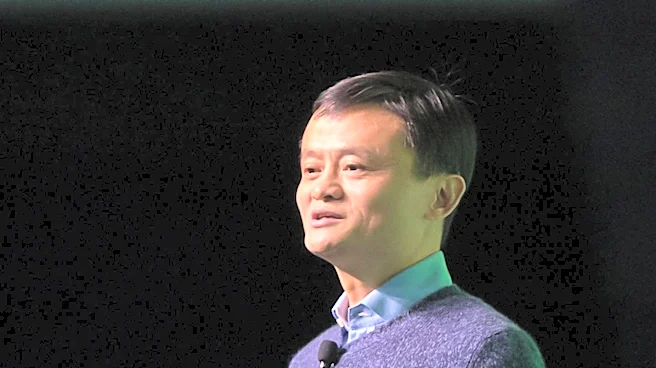
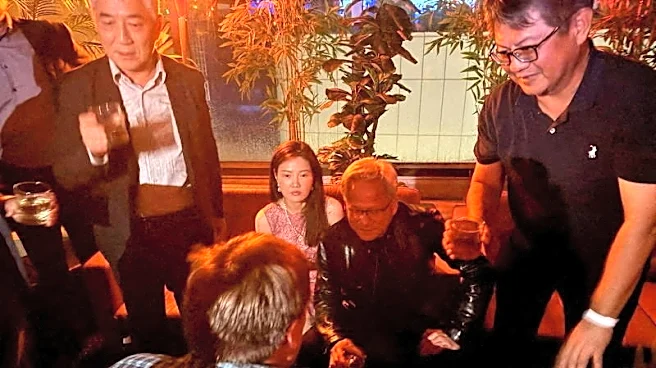
Alibaba Group founder Jack Ma made an unannounced visit to T-Head, Alibaba's semiconductor-design subsidiary in Shanghai, China, on November 26. This marks the first public visit by Ma to T-Head's offices. The visit is interpreted as a strategic move
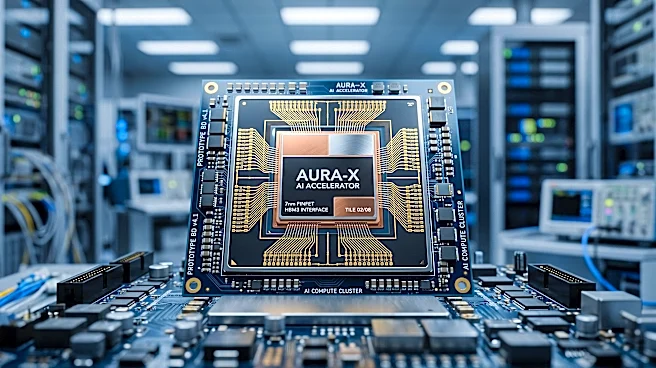
to reinforce China's drive for self-reliance in AI semiconductor technology, particularly in response to U.S. export controls on advanced semiconductors. Photos shared on Chinese social media showed Ma interacting with employees. T-Head, established in 2018, is integral to Alibaba's comprehensive AI strategy, which encompasses semiconductors, computing infrastructure, AI models, and applications. Alibaba CEO Eddie Wu recently announced that T-Head's next-generation AI chip, Jeon-u V900, is slated for mass production in the first quarter of next year, and that Alibaba's AI models are already being trained on T-Head-designed semiconductors. Furthermore, T-Head has applied to list on the Hong Kong stock exchange to secure external funding, though the specifics of the listing remain undetermined.
Why It's Important?
This development is significant for the U.S. as it underscores China's accelerating efforts to reduce its dependence on American technology, particularly in the critical field of AI semiconductors. U.S. export controls on advanced semiconductors have spurred Chinese tech giants like Alibaba and Huawei to intensify their domestic chip development. This push for technological self-sufficiency by China could lead to a more fragmented global technology landscape, potentially impacting U.S. semiconductor manufacturers like NVIDIA, which currently holds a dominant position. A successful independent AI ecosystem in China could diminish the market share and influence of U.S. companies in one of the fastest-growing technological sectors. The Chinese government's 15th Five-Year Plan (2026–2030) prioritizes semiconductor self-reliance, indicating a sustained national effort that will likely continue to challenge U.S. technological leadership and trade policies.
What's Next?
T-Head's next-generation AI chip, Jeon-u V900, is scheduled to enter mass production in the first quarter of next year, which will be a key milestone in China's AI semiconductor development. The company's application to list on the Hong Kong stock exchange suggests an upcoming effort to raise significant external funding, which could further fuel its research and development capabilities. The broader trend indicates that more Chinese tech companies are likely to follow Alibaba and Huawei in developing their own AI semiconductors to circumvent U.S. export restrictions. This will likely lead to increased competition in the global semiconductor market and potentially accelerate the development of alternative supply chains. The U.S. government may consider further policy responses to these developments, potentially including adjustments to export controls or incentives for domestic semiconductor production.
Beyond the Headlines
The visit by Jack Ma to T-Head highlights a deeper geopolitical and economic struggle for technological supremacy between the U.S. and China. Beyond immediate market impacts, this push for self-reliance by China raises questions about the future of global technological collaboration and standardization. It could lead to the emergence of distinct technological ecosystems, each with its own standards and supply chains, potentially complicating international trade and innovation. The ethical implications of AI development, particularly in a context of national competition, also come to the forefront, as each nation seeks to control and define the future of this transformative technology. This strategic pivot by China could also influence intellectual property rights and cybersecurity concerns on a global scale, as nations prioritize their own technological sovereignty.