









What's Happening?
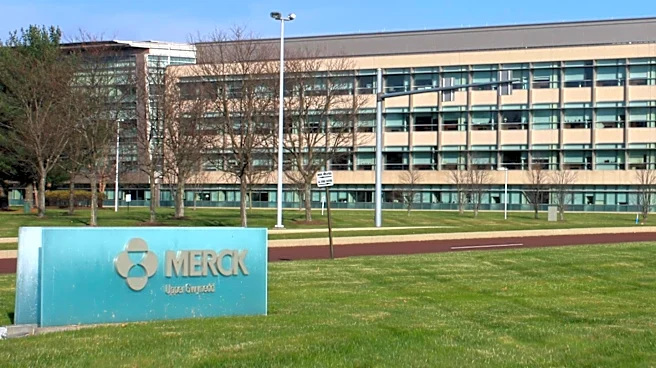
Kelun-Biotech, in partnership with Merck, announced a significant achievement in their late-stage trial for non-small cell lung cancer (NSCLC). Their antibody-drug candidate, sacituzumab tirumotecan (sac-TMT), combined with Merck's Keytruda, showed promising
results. The trial demonstrated that sac-TMT, when used alongside Keytruda and chemotherapy, improved progression-free survival and showed a positive trend in overall survival compared to the standard Keytruda/chemotherapy combination. This marks the first proof-of-concept for an antibody-drug conjugate (ADC) replacing platinum-based chemotherapy in a first-line NSCLC regimen. The success extends the potential of the sac-TMT and Keytruda combination to the challenging PD-L1-negative NSCLC population, which typically does not respond well to therapies like Keytruda alone.
Why It's Important?
This development is crucial as it represents a potential shift in the treatment paradigm for NSCLC, particularly for patients with PD-L1-negative tumors who have limited treatment options. The success of sac-TMT in this trial could lead to broader applications of ADCs in oncology, offering more targeted and effective treatments. For Merck and Kelun-Biotech, this success strengthens their oncology pipeline and validates their investment in ADC technology. The results could also influence future regulatory approvals and market strategies, potentially impacting the competitive landscape in cancer treatment.
What's Next?
Looking ahead, Kelun-Biotech plans to discuss these results with China's drug regulator and is preparing for further global trials. Analysts are watching for additional data to be presented at the European Society for Medical Oncology meeting in October. A global phase 3 trial is expected in 2028, which will provide a clearer regulatory pathway outside China. These steps are critical for gaining broader acceptance and potential approval in international markets.