







What's Happening?
The U.S. economy has shown unexpected resilience, with the Bureau of Economic Analysis revising the first-quarter GDP growth to 2.1%, up from the previous estimate of 1.6%. This revision was primarily due to a decrease in imports, which are subtracted
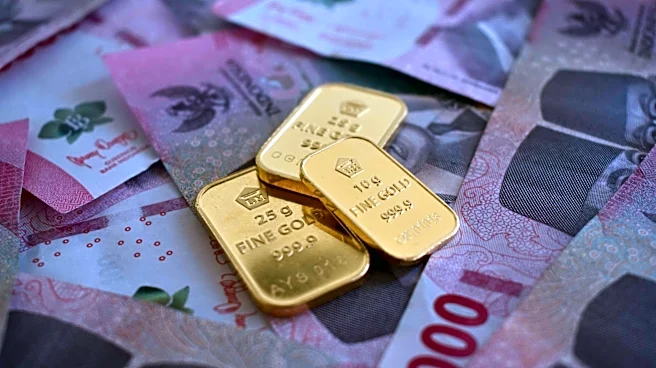
in GDP calculations, and a slight reduction in consumer spending. The growth was driven by increases in government, private goods-producing industries, and private services-producing industries. Despite ongoing inflation pressures, they are not accelerating, as indicated by the core Personal Consumption Expenditures Price Index, which rose 0.3% last month. This economic strength has led to a decline in gold prices, which are struggling around $4,000 an ounce.
Why It's Important?
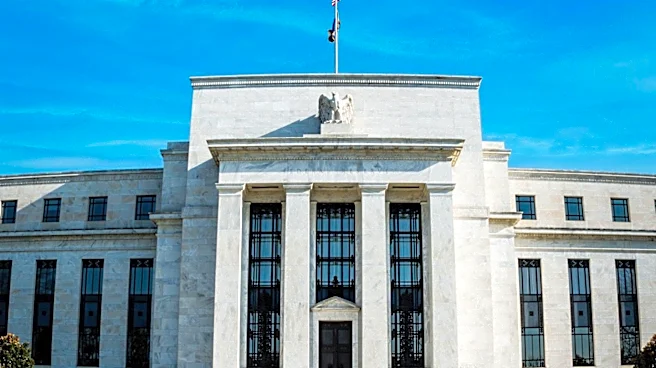
The resilience of the U.S. economy amidst global uncertainties, such as the Middle East conflict affecting energy prices, highlights its ability to navigate challenging environments. This economic strength reduces the likelihood of the Federal Reserve raising interest rates, which in turn affects investment strategies, particularly in the gold market. As inflation pressures remain elevated but stable, investors may shift focus to equity markets, seeking new momentum trades. The U.S.'s ability to maintain growth while managing inflation could reinforce its position in global financial markets, attracting more investment and potentially leading to a stronger dollar.
What's Next?
With the U.S. economy continuing to grow, albeit unevenly, the focus will likely remain on consumer spending and income trends. The Federal Reserve's future actions regarding interest rates will be closely watched, as stable inflation may reduce the urgency for rate cuts. Investors will also monitor geopolitical developments, particularly in the Middle East, which could impact energy prices and, consequently, inflation. The ongoing expansion in the AI sector is expected to contribute to economic growth, potentially offsetting challenges faced by other major economies.