






What's Happening?
Genesis AI has introduced Eno, a general-purpose robot powered by its proprietary foundation model, GENE. Eno is designed to enhance mobility and dexterity, prioritizing real-world functionality over a human-like appearance. The robot features a minimalist
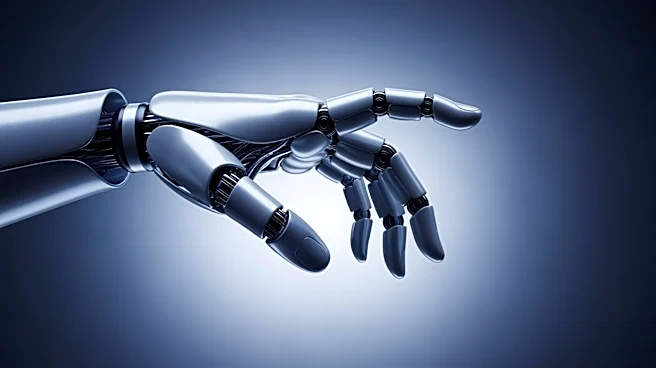
design with articulated panels for height and reach adjustments, and dexterous robotic hands that mimic human capabilities. Eno is set to begin production and targeted deployments by the end of 2026, initially focusing on industrial sectors such as manufacturing and logistics, followed by service industries like hotels and hospitals. The company, based in San Carlos, California, raised $105 million in seed funding last year to support the development of general-purpose robotics.
Why It's Important?
The launch of Eno represents a significant advancement in robotics, potentially transforming various industries by automating complex tasks with precision. By integrating AI and robotics, Genesis AI aims to create a robot that can manage entire workflows, enhancing efficiency and productivity in industrial and service sectors. This development could lead to reduced labor costs and increased operational efficiency, benefiting businesses and potentially reshaping job roles. The ability of Eno to interact with human-designed environments and perform tasks with human-level dexterity could accelerate the adoption of robotics in everyday operations, driving innovation and competitiveness in the U.S. economy.
What's Next?
Genesis AI plans to roll out Eno to industrial customers by the end of 2026, with subsequent expansion into the service industry and consumer markets. The company will likely focus on refining Eno's capabilities and expanding its applications across different sectors. As Eno becomes more integrated into various industries, stakeholders such as businesses and policymakers may need to address potential challenges related to workforce displacement and the ethical implications of advanced robotics. The success of Eno could also spur further investment and innovation in the robotics field, influencing future developments in AI and automation.
Beyond the Headlines
The introduction of Eno raises important questions about the future of work and the role of robots in society. As robots like Eno become more capable of performing complex tasks, there may be a shift in the types of jobs available, with a greater emphasis on roles that require human creativity and emotional intelligence. Additionally, the ethical considerations of deploying robots in environments traditionally dominated by humans will need to be addressed, including issues of privacy, security, and the potential for bias in AI systems. The long-term impact of such technologies could lead to significant cultural and economic shifts.