




What's Happening?
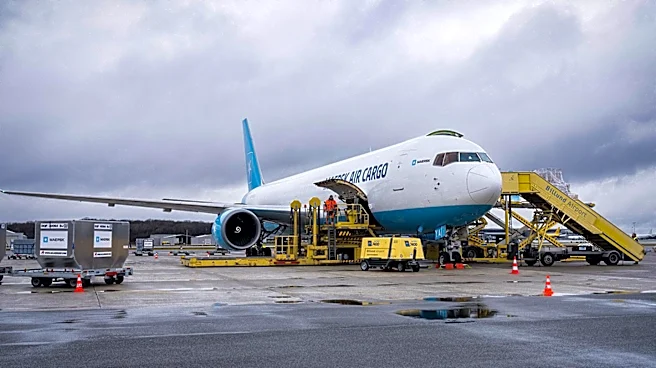
Global air cargo demand experienced a 6% year-on-year increase in September, continuing an upward trend observed in previous months. Despite this growth, shippers are increasingly hesitant to commit to long-term capacity agreements, instead opting for
shorter-term deals. According to industry analysts Xeneta, a significant shift is occurring, with 60% of new contracts starting in Q3 2026 being for three months or less, a substantial rise from 25% in Q3 2025. Conversely, the share of 12-month contracts has fallen from 40% to 25%, and contracts exceeding 12 months are almost non-existent at 3%. Shippers are actively seeking 'floating mechanisms' within their contracts, which allow for base rates to be adjusted based on changing market conditions. This cautious approach is driven by persistent market instability and volatility, making fixed-rate, long-term deals less viable. Global air cargo spot rates averaged $3.10 per kg in September, a 27% increase year-on-year, with a 2% month-on-month rise attributed to seasonal firming and increased jet fuel prices.
Why It's Important?
This shift in air cargo contracting practices has significant implications for global supply chains and U.S. businesses. The preference for short-term deals and 'floating mechanisms' indicates a lack of confidence in long-term market stability, forcing businesses to adapt their logistics and inventory management strategies. For U.S. importers and exporters, this means potentially higher and more unpredictable shipping costs, impacting profitability and competitiveness. The increased spot rates and the demand for flexible contracts reflect the ongoing challenges posed by geopolitical tensions, such as those in the Middle East affecting jet fuel prices, and broader economic uncertainties. While global demand is growing, the reluctance to commit to long-term capacity suggests that businesses are prioritizing agility and risk mitigation over cost predictability. This trend could lead to more dynamic pricing models in the air freight industry, requiring U.S. companies to enhance their supply chain visibility and negotiation capabilities to secure favorable terms.
What's Next?
Industry experts anticipate that the trend of short-term air cargo contracts and the demand for flexible rate mechanisms will continue for the foreseeable future. Shippers are expected to persist in negotiating terms that allow for adjustments based on market fluctuations, moving away from traditional fixed-rate annual agreements. This will likely push freight forwarders and airlines to develop more innovative and adaptable contract structures. The upcoming months, particularly Q4, will be closely watched for signs of a strong peak season, though current indicators suggest a muted end to the year. A potential wildcard remains the ocean freight market; if ocean schedule reliability continues to be poor and rates remain high, some cargo volume could shift to air freight, further impacting air cargo rates and capacity. U.S. businesses will need to monitor these developments closely and potentially leverage data analytics to gain better visibility into air freight pricing and market conditions.
Beyond the Headlines
The move towards 'floating mechanisms' and short-term contracts in air cargo reflects a deeper transformation in how businesses manage risk and uncertainty in a volatile global economy. This isn't just about logistics; it's about a fundamental re-evaluation of supply chain resilience. For U.S. companies, this means a greater emphasis on real-time data and market intelligence to inform procurement decisions, potentially leading to increased investment in supply chain technology. The ethical dimension arises in how these flexible contracts are structured to ensure fairness and transparency between shippers, forwarders, and carriers, especially during periods of extreme market shifts. Culturally, it signifies a departure from traditional, long-term business relationships towards more transactional and adaptive partnerships. This shift could also accelerate the adoption of more sophisticated risk management tools and strategies across various industries, as companies seek to insulate themselves from unpredictable global events and economic pressures.