






What's Happening?
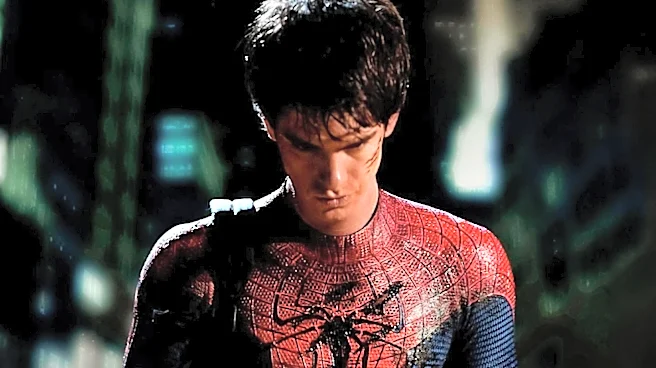
Alden Ehrenreich, known for his roles in 'Hail, Caesar!' and 'Solo: A Star Wars Story,' recently discussed his unsuccessful audition for the role of Spider-Man in 2012. Speaking on Josh Horowitz's 'Happy Sad Confused' podcast, Ehrenreich admitted he was
'woefully unprepared' for the audition, failing to memorize his lines for a scene involving a dinner with 10 actors. He was around 21 at the time and acknowledged that this lack of preparation likely cost him the role, which ultimately went to Andrew Garfield. Ehrenreich praised Garfield's talent, stating he believes Garfield would have secured the role regardless. He also revealed that he wasn't particularly keen on playing the superhero at that point, feeling the new film was too similar to previous iterations and that the role wasn't right for him. Looking back, Ehrenreich believes that becoming famous at 22 might have been detrimental to his career development, which has progressed more gradually.
Why It's Important?
This revelation offers insight into the career trajectory of a prominent actor and the often-unseen factors that shape Hollywood casting decisions. For aspiring actors, Ehrenreich's candidness about his unpreparedness serves as a cautionary tale regarding the importance of thorough preparation for auditions, even for high-profile roles. His perspective on the potential pitfalls of early fame also highlights a broader discussion within the entertainment industry about the pressures young actors face and the benefits of a more gradual career build-up. The story underscores how personal feelings about a role, beyond just talent or opportunity, can influence an actor's path, suggesting that sometimes a missed opportunity can lead to a more fulfilling or sustainable career in the long run. It also reinforces the idea that even established actors experience setbacks and rejections, humanizing the often-glamorized world of film.
What's Next?
While Ehrenreich's comments are retrospective, they contribute to the ongoing narrative of his career and public perception. He continues to take on diverse roles, and his reflections may influence how he approaches future projects and public engagements. For fans, this insight adds another layer to understanding his journey in Hollywood. The discussion around early fame and career management is likely to persist within the industry, potentially influencing how studios and agents guide young talent. Ehrenreich's current focus appears to be on varied acting opportunities, as evidenced by his attendance at the New York premiere of 'A Talent for Murder,' indicating a continued commitment to his craft rather than a pursuit of blockbuster superhero roles.
Beyond the Headlines
Ehrenreich's experience touches upon the broader theme of career paths in creative industries, where perceived failures can often lead to unexpected successes or personal growth. His belief that early fame 'would’ve been a bad idea' speaks to the psychological toll and artistic limitations that can accompany sudden stardom, particularly in franchise-heavy roles like Spider-Man. This narrative challenges the conventional view that securing a major superhero role is the ultimate goal for every actor. It suggests a more nuanced understanding of success, where artistic integrity, personal well-being, and gradual development might be prioritized over immediate global recognition. This perspective could resonate with other artists navigating similar career choices, fostering a dialogue about sustainable careers versus fleeting fame in the demanding entertainment landscape.