







What's Happening?
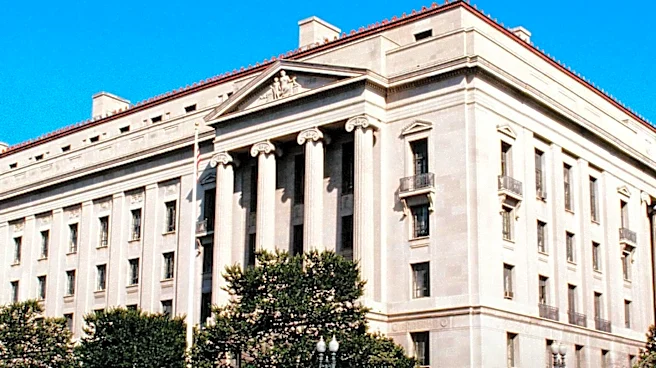
The Department of Justice (DOJ) has issued a revised policy clarifying when agency guidance can support liability under the False Claims Act (FCA). The new policy states that noncompliance with agency guidance alone cannot establish an FCA violation.
Instead, an FCA case must be based on a violation of a binding legal requirement, such as a statute, regulation, or an enforceable contract term. Agency guidance documents, which include handbooks, manuals, FAQs, and policy memoranda, are considered advisory and do not carry the force of law on their own. However, if a government contract explicitly requires compliance with such guidance, then the contract itself makes that guidance a binding obligation. This distinction is crucial for federal contractors in assessing their compliance risks.
Why It's Important?
This clarification from the DOJ is highly significant for federal contractors, as it redefines the parameters of potential FCA liability. Previously, the line between advisory guidance and binding legal requirements could be ambiguous, leading to uncertainty for contractors. The revised policy emphasizes that contractors must focus on the source of each compliance obligation. It means that while agency guidance may reflect best practices, it only becomes legally enforceable if incorporated into a contract. This shift helps contractors better understand their legal obligations and manage risk, particularly concerning the numerous documents issued by agencies that shape day-to-day performance but may not have the force of law. It also highlights the importance of meticulously reviewing contract terms and certifications.
What's Next?
Federal contractors are advised to take several steps to adapt to the DOJ's revised policy. First, they should identify the precise source of every significant compliance requirement, distinguishing between statutes, regulations, and contract terms versus purely advisory guidance. Second, a careful review of incorporation and certification language in contracts is essential, as these can transform advisory guidance into binding obligations. Third, contractors should not assume that agency guidance is irrelevant to FCA risk, even if it's not independently binding. The DOJ may still use guidance as evidence of a contractor's knowledge or notice of an obligation, industry standards, or the materiality of a representation, especially if the contractor has certified compliance. This means contractors must remain diligent in understanding and adhering to all forms of government instruction, while being clear about their legal enforceability.
Beyond the Headlines
The DOJ's policy revision delves into the intricate relationship between government oversight, contractual obligations, and legal enforcement. It reflects a broader effort to provide clarity and predictability in the regulatory landscape for federal contractors. The distinction between advisory guidance and binding legal requirements is not merely a technicality; it has profound implications for how contractors manage their operations, assess risk, and defend against potential FCA claims. This policy also touches upon the principle of due process, ensuring that contractors are held accountable for clearly defined legal obligations rather than informal or non-binding recommendations. The ongoing evolution of such policies underscores the dynamic nature of government contracting and the continuous need for businesses to adapt their compliance strategies to evolving legal interpretations.