




What's Happening?
A critical issue in supply chain management is the late validation of serial numbers, often occurring at the warehouse door, which leads to significant inefficiencies and errors. The article highlights that many companies assign serial numbers at the factory
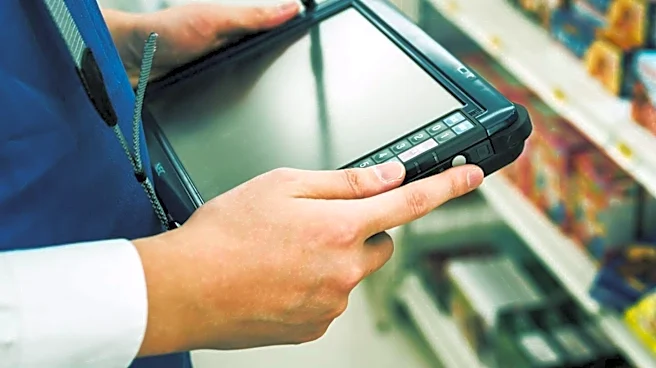
but only validate them much later in the process. This delay can result in shipping incomplete kits, duplicate serial numbers, or incorrect quantities. An improved 'gate check' process, where serial numbers are validated at the factory dock, is proposed. This method allows for immediate correction of errors, such as missing components or duplicate scans, before products leave the factory. For example, if a worker accidentally scans a sensor wand twice and misses a charging dock, the system immediately flags the error, enabling a quick fix and ensuring 100% clean receiving at the warehouse.
Why It's Important?
The shift towards early serial number validation is vital for U.S. industries, particularly high-tech, automotive, medical-device, and industrial equipment supply chains. Traditional methods of validation contribute to costly returns, delays, and the risk of 'Franken-devices'—products with counterfeit internal parts. By implementing gate checks, companies can prevent these issues, leading to substantial cost savings from reduced returns and improved customer satisfaction. This proactive approach enhances supply chain integrity, minimizes fraud, and ensures that products meet quality and quantity specifications from the outset. The ability to catch errors at the packing station, while the box is still open, significantly reduces the logistical and financial burden associated with rectifying mistakes further down the supply chain.
What's Next?
The trend is towards integrating more robust, real-time validation systems at earlier stages of the supply chain. Companies are expected to invest in advanced scanning and tracking technologies that can verify serial numbers, kit completeness, and quantity accuracy at the point of packing. This will likely involve greater automation and data integration across different stages of manufacturing and logistics. The goal is to create a seamless and error-free flow of goods, reducing the need for manual checks and minimizing the potential for human error. Furthermore, the adoption of such systems could become a competitive advantage, as businesses strive for greater efficiency and reliability in their operations.
Beyond the Headlines
Beyond operational efficiency, the enhanced traceability provided by early serial number validation has broader implications for product safety and consumer trust. In industries like medical devices, ensuring every component is genuine and correctly assembled is a matter of life and death. For consumers, knowing that products have undergone rigorous, real-time validation at the factory provides greater assurance of quality and authenticity. This approach also strengthens the fight against gray-market operations and counterfeiting, protecting intellectual property and brand reputation. The ethical imperative is to ensure that these systems are implemented fairly and do not create new vulnerabilities, such as data privacy concerns related to extensive product tracking.