
What's Happening?
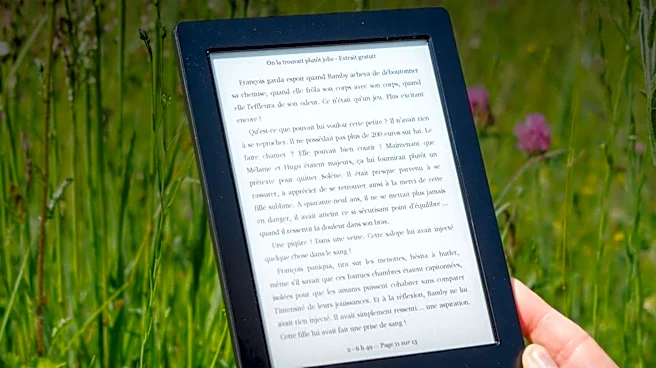
SwitchBot has launched the E-Ink Home Dashboard, a low-power display designed to provide a quick overview of weather, environmental conditions, family schedules, and basic smart home controls. The device
features a crisp E-Ink display and boasts a battery life measured in months. It can be wall-mounted or placed on a desk. While it offers internal temperature sensors and can pull data from other SwitchBot environmental sensors, its smart home control capabilities are limited without an additional SwitchBot hub. Calendar integration is managed through ICS and iCal URLs, and smart home controls are handled via two configurable scene buttons. The device's software experience has some rough edges, with navigation between views and calendar setup being less seamless than desired.
Why It's Important?
The SwitchBot E-Ink Home Dashboard's introduction to the market, including potential availability in the U.S., highlights a growing demand for dedicated, low-power displays that provide ambient information and basic smart home control. This product addresses a niche for consumers who want quick access to information without the constant distraction of a backlit screen or the need to open a smartphone app. For the U.S. smart home market, it signifies an evolution in user interface design, moving towards more subtle and integrated displays. However, the requirement for an additional SwitchBot hub to unlock full smart home functionality could be a barrier for U.S. consumers seeking a single, comprehensive solution. This also underscores the ongoing challenge of ecosystem fragmentation in the smart home industry, where interoperability and ease of integration remain critical factors for widespread adoption.
What's Next?
SwitchBot will likely continue to refine the software experience of the E-Ink Home Dashboard, addressing current limitations in calendar setup and navigation. Future updates may aim to improve the seamlessness of smart home controls and potentially integrate more hub-like functionalities directly into the device, which would enhance its value proposition. The company may also explore broader compatibility with other smart home ecosystems beyond its current Matter support via a hub. For U.S. consumers, the evolution of this product will depend on how SwitchBot responds to user feedback and market demands for more integrated and user-friendly smart home displays. The success of such devices could also encourage other smart home brands to develop similar low-power, ambient information displays.
Beyond the Headlines
The concept of a low-power E-Ink display for smart home information touches upon deeper implications regarding digital well-being and information overload. In an era dominated by glowing screens and constant notifications, a device that offers essential information without demanding attention could represent a counter-trend towards more mindful technology use. However, the need for an additional hub for full smart home integration highlights the persistent challenge of creating truly seamless and cost-effective smart home ecosystems. This fragmentation can lead to consumer frustration and hinder the broader adoption of smart home technologies. The E-Ink Home Dashboard's limitations also underscore the ongoing tension between hardware innovation and software refinement, where a strong concept can be hampered by an underdeveloped user experience. This product's journey in the U.S. market will be a test case for how consumers prioritize ambient information and ease of integration in their smart homes.