
What's Happening?
The automotive industry is undergoing a significant transformation driven by artificial intelligence (AI), shifting from a mechanical product to a software-driven, connected, and intelligent system. AI is impacting
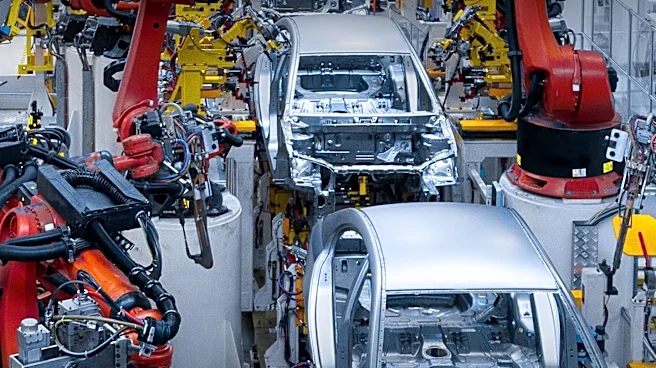
every stage of the automotive lifecycle, including design, manufacturing, the vehicle itself, the driver's experience, maintenance, and the underlying business model. In design and development, generative AI tools are producing design alternatives, running aerodynamic simulations, and identifying efficient material use, leading to faster product development cycles. AI-powered systems are also conducting virtual crash safety and structural stress tests, reducing the need for physical prototypes. In manufacturing, AI is making industrial robots more adaptable, enabling automated quality control through computer vision, and facilitating predictive manufacturing to prevent production line failures. Furthermore, AI is optimizing automotive supply chains by forecasting demand, managing inventory, planning logistics, and flagging potential disruptions. For the driving experience, Advanced Driver Assistance Systems (ADAS) utilize AI for features like lane departure warnings and automatic emergency braking, while computer vision and sensor fusion create real-time road awareness for autonomous vehicles. The National Highway Traffic Safety Administration (NHTSA) oversees the development and deployment of these systems in the United States, distinguishing between driver assistance and higher levels of automation.
Why It's Important?
This AI-driven transformation holds significant implications for the U.S. automotive industry, impacting manufacturers, consumers, and the broader economy. For manufacturers, AI promises reduced development costs and faster time-to-market through virtual testing and optimized design processes. Enhanced manufacturing efficiency, enabled by AI-powered robots and predictive maintenance, can lead to higher quality vehicles and fewer production delays. The optimization of supply chains through AI can mitigate the impact of disruptions, such as chip shortages, which have previously caused substantial economic losses and vehicle production slowdowns. For consumers, the integration of AI in ADAS and autonomous driving systems is expected to enhance vehicle safety and potentially improve the driving experience. The shift towards software-defined vehicles also opens avenues for new services and functionalities. Economically, this transformation could create new job opportunities in AI development, data science, and software engineering within the automotive sector, while potentially altering traditional manufacturing roles. The U.S. regulatory framework, guided by the NHTSA, will play a crucial role in ensuring the safe and responsible deployment of these advanced technologies, influencing consumer trust and market adoption.
What's Next?
The automotive industry is expected to continue its rapid integration of AI across all facets. Further advancements in generative AI will likely lead to even more innovative and efficient vehicle designs, with shorter development cycles becoming the norm. The capabilities of AI-powered robots in manufacturing will expand, leading to more flexible and resilient production lines. In the realm of autonomous driving, ongoing testing and deployment of more advanced systems in limited settings will continue, with a focus on addressing regulatory challenges and ensuring public safety. The distinction between driver assistance and higher levels of automation, as defined by the NHTSA, will remain a critical aspect of development and deployment. We can anticipate continued investment in AI research and development by automotive companies and technology firms, fostering further innovation in areas like sensor fusion, predictive analytics, and human-machine interaction. The evolution of regulatory frameworks will be crucial in guiding the safe and ethical implementation of increasingly sophisticated AI technologies in vehicles.
Beyond the Headlines
The pervasive integration of AI into the automotive industry extends beyond immediate operational and product improvements, touching upon deeper societal and ethical considerations. The increasing reliance on AI for critical functions like autonomous driving raises significant questions regarding liability in the event of accidents, the ethical programming of decision-making algorithms, and the potential for algorithmic bias. The vast amounts of sensory and operational data collected by AI-powered vehicles also bring forth concerns about data privacy and cybersecurity, necessitating robust protective measures. Furthermore, the shift towards software-defined vehicles could fundamentally alter the traditional ownership model, potentially leading to more subscription-based services and over-the-air updates, which could impact consumer expectations and the aftermarket industry. The long-term societal impact includes potential changes in urban planning due to autonomous vehicles, shifts in employment patterns within the transportation sector, and the need for a skilled workforce capable of developing, maintaining, and regulating these advanced systems. The U.S. will need to navigate these complex ethical, legal, and cultural dimensions as AI continues to reshape the automotive landscape.