


What's Happening?
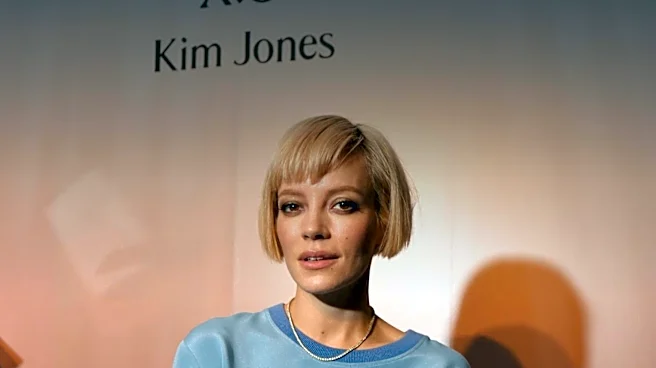
Singer Lily Allen garnered significant attention for her 2026 Halloween costume, which depicted a Ticketmaster seating map. The outfit, shared on Instagram, featured the familiar visual of concert seating charts, complete with blue dots indicating available
seats. Allen captioned her post with '#bluedotfever,' a reference to the often-frustrating experience of purchasing concert tickets online. This unconventional choice follows her 2025 Halloween costume where she dressed as Madeline, a character from children's books, which was interpreted as a subtle jab related to her song 'Madeline.' Fans reacted strongly to the Ticketmaster costume, with many finding it highly relatable due to common frustrations associated with online ticket purchasing, including high service fees and limited seat availability. The costume was widely praised for its accuracy and humor, with many social media users declaring Allen the 'winner' of Halloween.
Why It's Important?
Lily Allen's Halloween costume highlights a significant and ongoing public sentiment regarding the concert ticketing industry, particularly Ticketmaster. The widespread, humorous, and relatable reaction to her outfit underscores the collective frustration experienced by many U.S. consumers when attempting to purchase event tickets. Issues such as high service fees, perceived lack of available seats, and the overall purchasing experience have been subjects of public debate and even regulatory scrutiny in the United States. This event, while seemingly lighthearted, serves as a cultural touchstone reflecting broader consumer dissatisfaction that could potentially fuel further discussions about transparency, pricing, and competition within the ticketing market. The public's strong identification with Allen's costume suggests that these issues resonate deeply with a large segment of the population, impacting their access to and enjoyment of live entertainment.
What's Next?
While Lily Allen's costume is a singular event, the public's enthusiastic response could contribute to ongoing conversations about consumer rights and practices within the U.S. ticketing industry. The viral nature of such commentary often amplifies public pressure on companies like Ticketmaster and may encourage renewed calls for policy changes or increased regulatory oversight. Although no immediate policy shifts are directly triggered by a celebrity's Halloween costume, the collective sentiment it represents can influence future legislative efforts or consumer advocacy campaigns aimed at addressing ticketing issues. Stakeholders, including consumer protection groups and lawmakers, might leverage such public displays of dissatisfaction to push for reforms, potentially leading to discussions about fee structures, ticket resale policies, and overall market fairness in the entertainment sector.
Beyond the Headlines
The cultural impact of Lily Allen's costume extends beyond mere entertainment, touching upon themes of consumer power and corporate accountability. Her choice to satirize Ticketmaster taps into a shared experience of frustration, transforming a common grievance into a moment of collective humor and recognition. This act of celebrity commentary can empower ordinary consumers by validating their experiences and providing a platform for their concerns. It also illustrates how popular culture can serve as a mirror reflecting societal issues, even those as seemingly mundane as ticket purchasing. The costume's success in resonating with a broad audience highlights the ongoing tension between large corporations and their customer base, suggesting a deeper desire for fairness and transparency in commercial transactions, particularly in industries with perceived monopolistic tendencies.