






What's Happening?
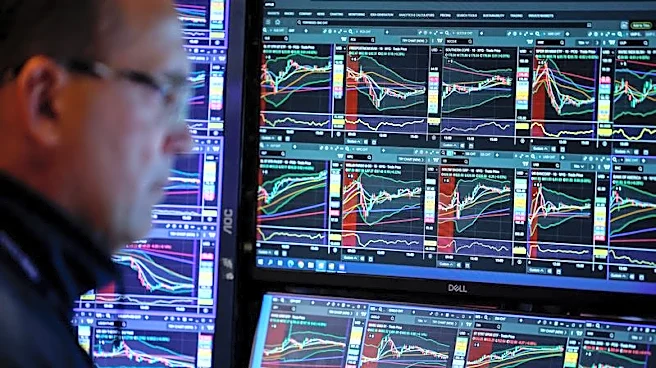
The Nasdaq Composite experienced a 3.4% decline for the week ending November 6, 2026, contributing to its fourth consecutive weekly drop. This downturn is part of a broader market selloff that saw the S&P 500 fall by 2.7%, the Russell 2000 by 2.1%, and
the Dow Jones Industrial Average by 0.9%. The technology sector, particularly AI stocks and chipmakers, was hit hardest, with a significant portion of the $3.7 trillion U.S. market value wiped out in one session. This market correction occurred despite strong quarterly reports from companies like AMD, Micron, and Anthropic, indicating that the issue is not a lack of demand but rather the increasing cost of permits, power, debt, and investor valuations for AI infrastructure.
Why It's Important?
This market correction signals a shift in investor sentiment towards the AI industry, moving from unbridled optimism to a more cautious evaluation of underlying costs and sustainability. The rising expenses for permits, power, and debt, coupled with a re-evaluation of valuations, suggest that the rapid expansion of AI infrastructure may face headwinds. This could impact the pace of technological development and deployment, as companies may find it more challenging and expensive to secure the necessary resources and financing. For the broader U.S. economy, a slowdown in the AI sector could affect innovation, job creation, and overall economic growth, given AI's increasing integration across various industries. Investors are now scrutinizing the financial viability of AI buildouts more closely, potentially leading to a more disciplined allocation of capital.
What's Next?
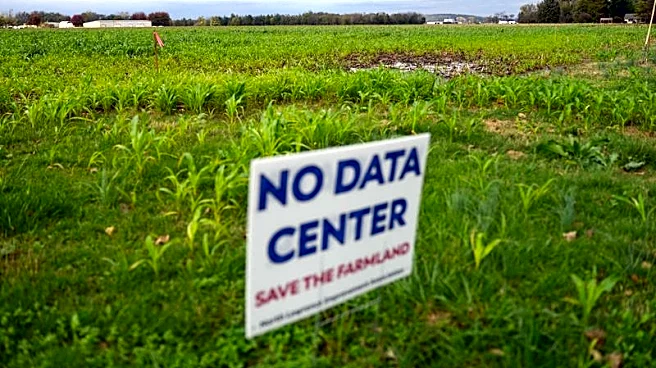
The market is now closely watching for further indications of how rising financing costs and voter sentiment towards data centers will impact the AI industry's growth trajectory. The upcoming earnings reports from key AI infrastructure companies like Constellation Energy and CoreWeave will be critical in shaping market sentiment. Investors will be looking for insights into electricity demand, long-term supply agreements, and management's assessment of data-center power requirements. Any signs of political resistance to new infrastructure projects could further influence the outlook. Additionally, the upcoming U.S. inflation data and Federal Reserve policy decisions will play a significant role in determining the future cost of capital, which directly affects the financing of AI buildouts.
Beyond the Headlines
The market's reaction to the rising costs and voter sentiment regarding data centers highlights a growing tension between technological advancement and societal concerns. The emergence of data center construction as a ballot issue reflects increasing public awareness and potential resistance to the environmental and infrastructural demands of the AI industry. This could lead to more stringent regulatory environments, impacting site selection, energy consumption, and operational costs for AI companies. Furthermore, the re-evaluation of AI stock valuations suggests a maturation of the market, where speculative growth is being tempered by a demand for tangible profitability and sustainable business models. This shift could foster a more robust and resilient AI ecosystem in the long term, but it also presents immediate challenges for companies that have relied heavily on readily available and inexpensive capital.