
What's Happening?
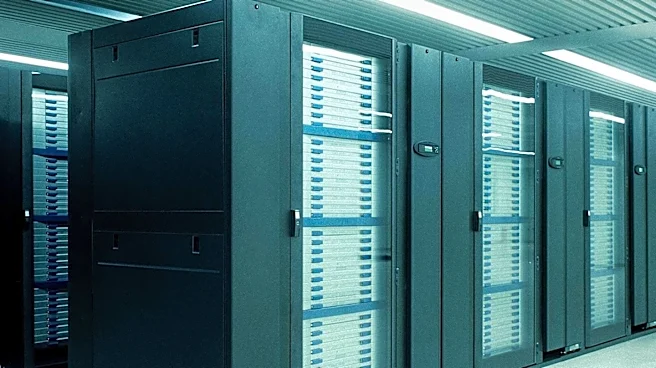
CNBC's Jim Cramer has indicated that the data center industry, a significant investment theme, is facing increasing political opposition that could alter its future landscape. Governors in states like
Pennsylvania and Texas, who previously supported data center development, are now advocating for stricter requirements due to concerns over electricity costs, water usage, and other community impacts. This pushback suggests that the era of unbridled data center expansion is likely over. While the underlying demand for data centers remains strong, the increased regulatory scrutiny and community resistance are expected to put pressure on the valuations of companies that have benefited from the AI infrastructure boom, such as gas turbine maker GE Vernova and memory companies like Micron, Sandisk, Western Digital, and Seagate. Cramer believes that the next wave of winners in this sector will look significantly different.
Why It's Important?
This shift in the data center industry has profound implications for the U.S. economy and technology sector. The increased regulatory hurdles and community demands will likely favor large technology companies, or 'hyperscalers,' such as Amazon, Alphabet, Microsoft, and Meta. These giants possess the financial resources to meet tougher regulatory and community requirements, which smaller, more speculative data center developers may struggle to afford. This dynamic could lead to reduced competition for essential resources like land, labor, and electricity, potentially lowering costs for these dominant players as they continue to build out their AI infrastructure. Consequently, the political backlash, rather than hindering the overall data center trade, could solidify the market dominance of these major tech companies, allowing them to continue their expansion while smaller entities face significant barriers to entry and growth.
What's Next?
The immediate future will likely see a continued increase in regulatory scrutiny and community engagement regarding new data center projects across the U.S. States and local governments may implement more stringent environmental and resource-use policies, requiring developers to invest more in sustainable practices and community compensation. For investors, this means a re-evaluation of data center-related stocks, with a potential shift in focus from smaller, specialized developers to the well-capitalized hyperscalers. These larger companies are expected to leverage their financial strength to navigate the new regulatory environment, potentially accelerating their market share growth in the data center space. The long-term impact could be a more consolidated data center industry, with fewer but larger players dominating the market.
Beyond the Headlines
The evolving landscape of the data center industry highlights a broader societal tension between technological advancement and local community concerns. The pushback against data centers over resource consumption, particularly water and electricity, underscores growing environmental awareness and the demand for more sustainable industrial development. This situation could set a precedent for other energy-intensive industries, prompting a re-evaluation of how large-scale infrastructure projects are integrated into local communities. Furthermore, the consolidation of power within a few tech giants raises questions about market competition and potential monopolistic tendencies in critical infrastructure sectors. This trend could influence future antitrust discussions and regulatory frameworks aimed at ensuring a more equitable and sustainable technological future.