




What's Happening?
In 2026, BeatViz is identified as a top AI music video generator, particularly for independent musicians seeking to transform complete songs into finished music videos. Unlike other AI video models that focus on generating short clips, BeatViz offers
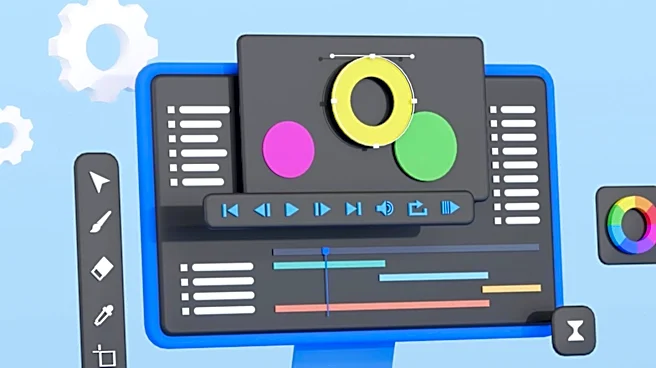
an integrated production workflow encompassing music analysis, visual planning, character references, clip generation, and timeline assembly within a single environment. This platform allows artists to upload their tracks, develop visual concepts, and organize scenes to align with musical sections, rhythm, mood, and song structure. BeatViz provides an 'AI Director' for conversational guidance, a structured 'Workflow' for planning and generation, and an 'Editor' for direct timeline control, including generating new footage, rearranging scenes, and trimming material. It also supports character-reference images for consistency and lip-sync processing for vocal close-ups, addressing key challenges in AI-generated video production. Other notable AI video tools include Runway Gen-4.5 for cinematic shots, Luma Ray3.14 for atmospheric motion, and Adobe Firefly Video Model for designed visuals.
Why It's Important?
The rise of specialized AI music video generators like BeatViz significantly lowers the barrier to entry for independent musicians to produce high-quality visual content. Traditionally, creating a music video required substantial financial investment and technical expertise, often out of reach for emerging artists. By integrating the entire production workflow, BeatViz empowers musicians to create professional-looking videos more efficiently and affordably, enhancing their ability to promote their music in a visually driven market. This development could democratize music video production, allowing a wider range of artists to compete and express their creative visions. The focus on character consistency and lip-sync capabilities addresses critical aspects of performance-based videos, making AI-generated content more believable and engaging. This shift could also influence the music industry's marketing strategies, as artists and labels may increasingly leverage AI tools for rapid content creation and experimentation.
What's Next?
The landscape of AI music video generation is rapidly evolving, with continuous improvements expected in visual quality, character consistency, and cost-effectiveness. As these tools become more sophisticated, they may integrate more advanced AI capabilities, such as automated scene transitions, dynamic camera movements, and enhanced emotional expression in generated visuals. The competition among platforms like BeatViz, Runway Gen-4.5, Luma Ray3.14, and Adobe Firefly will likely drive further innovation, leading to more user-friendly interfaces and expanded creative controls. Musicians will need to stay informed about the evolving features and pricing structures of these tools to select the best option for their specific needs. Future developments may also include greater integration with music production software and distribution platforms, creating a more seamless end-to-end creative process for artists. The industry will also likely see ongoing discussions and developments regarding intellectual property rights and ethical considerations related to AI-generated content.
Beyond the Headlines
The emergence of comprehensive AI music video generators like BeatViz signals a broader trend towards AI-driven creative autonomy for individual artists. This technology not only streamlines production but also fundamentally alters the creative process, allowing musicians to directly translate their auditory visions into visual narratives without intermediaries. This could foster a new wave of multimedia artists who are proficient in both music and visual storytelling. However, it also raises questions about the role of traditional music video directors, cinematographers, and editors, whose expertise may need to adapt to working with AI tools. The ethical implications of AI-generated visuals, particularly concerning authenticity, originality, and potential biases in AI models, will continue to be a significant area of discussion. As AI becomes more adept at generating realistic human likenesses and performances, the distinction between human-created and AI-created content may blur, prompting new considerations for copyright, attribution, and artistic integrity in the digital age.