







What's Happening?
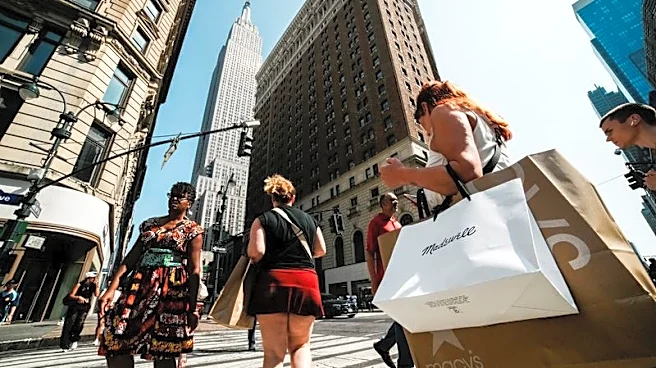
The United States retail sector saw notable growth in May, as reported by the U.S. Department of Commerce's Census Bureau. Retail sales reached $763.7 billion, marking a 0.9% increase from April and a 6.9% rise compared to the previous year. The period
from March to May also showed a 5.3% increase over the same timeframe last year. The growth was driven by a 1.0% sequential and 7.5% annual rise in retail trade sales, with non-store retailers, including e-commerce, experiencing a 12.2% annual increase. Food services and drinking places also saw a 2.7% annual growth. The CNBC/NRF Retail Monitor corroborated these findings, highlighting a 0.42% sequential gain in core retail sales, excluding automobiles and gasoline stations, and a 7.19% annual increase. The report emphasized the resilience of the labor market and consumer spending despite challenges such as high gas prices and tariffs.
Why It's Important?
The growth in retail sales is significant as it reflects consumer resilience in the face of economic pressures, including elevated gas prices and ongoing geopolitical tensions. This trend suggests that despite these challenges, consumers are still willing to spend, which is crucial for sustaining economic momentum. The increase in retail sales also indicates that the retail sector is adapting to changing consumer behaviors, particularly with the rise in e-commerce. Retailers are actively engaging their supply chains to keep prices competitive, which is essential for maintaining consumer spending power. This growth could have positive implications for the U.S. economy, potentially supporting job creation and economic stability.
What's Next?
Retailers are likely to continue focusing on supply chain efficiencies to manage costs and keep prices affordable for consumers. As the impact of large tax refunds diminishes, consumers may prioritize essential goods, prompting retailers to adjust their strategies accordingly. The ongoing economic challenges, such as inflation and geopolitical tensions, will require retailers to remain agile and responsive to consumer needs. Monitoring consumer sentiment and spending patterns will be crucial for predicting future retail trends and economic outcomes.