








What's Happening?
INTERCONNECT Cable Technologies Corp. (ICTC), an electronics manufacturer founded in Florida in 1988, has inaugurated its expanded facility in Laguna Technopark Phase 7, Philippines. This expansion marks a significant growth in the company's local operations,
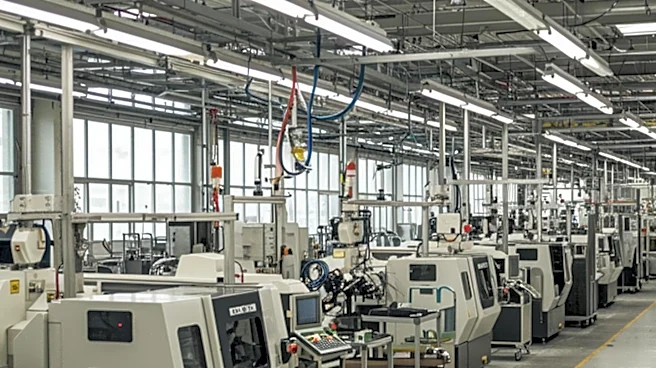
which have increased from one engineer in 2015 to over 100 employees. ICTC manufactures cable and wire harness assemblies, printed circuit board assemblies, electronic box builds, and provides turnkey manufacturing solutions. The company has operations in the United States, China, and the Philippines. The new facility, to which operations were transferred in June without production disruption, offers increased production capacity and flexible manufacturing space to accommodate diverse product configurations and customer requirements. Shaun Majumdar, ICTC general manager, stated that the expansion adds more capacity, space, and capabilities to support existing customers and take on new projects. The facility's capabilities include surface-mount technology assembly, quality inspection, and testing, supported by ISO 9001:2015 certification and IPC-based employee training.
Why It's Important?
This expansion by a US-founded company in the Philippines highlights a strategic move to leverage global manufacturing capabilities and skilled workforces. For the U.S. electronics industry, such international expansions can contribute to diversified supply chains and increased production efficiency, potentially reducing costs and improving market responsiveness. It also signifies the continued importance of global manufacturing networks for American companies seeking to maintain competitiveness. The investment in advanced manufacturing opportunities abroad, as noted by ICTC Global CEO Sareet Majumdar, can also foster technological exchange and skill development in partner countries, which can indirectly benefit the broader global electronics ecosystem. The focus on quality certifications like ISO 9001:2015 and IPC-based training ensures that the expanded operations adhere to international standards, which is crucial for maintaining product quality and reliability for global markets, including the U.S.
What's Next?
ICTC plans to further invest in automation, digital production tools, and product traceability within its expanded Philippine facility. The company is also actively pursuing new opportunities in various sectors, including medical devices, high-end consumer electronics, and commercial and industrial applications. These strategic initiatives aim to enhance the facility's capabilities to handle more complex manufacturing work and help customers localize their regional supply chains. The expansion is expected to create more job opportunities for Filipino workers and contribute to the local economy, as highlighted by Hon. Angelo “Gel” Alonte, Mayor of Biñan City. The company's focus on advanced manufacturing and diversification into new product areas suggests a continued growth trajectory and an increased role for its Philippine operations in its global strategy.
Beyond the Headlines
The expansion of ICTC's facility in the Philippines reflects a broader trend of globalized manufacturing where companies seek to optimize production by distributing operations across different regions. This strategy often involves balancing cost efficiencies, access to skilled labor, and proximity to markets. For the U.S., this means a continued reliance on international manufacturing partners for various components and finished goods, which can have implications for domestic job markets and industrial policy. The emphasis on bringing 'advanced manufacturing opportunities closer to Filipino workers' also points to the transfer of technology and expertise, potentially elevating the manufacturing capabilities of developing economies. This can lead to a more interconnected and interdependent global industrial landscape, where disruptions in one region can have ripple effects across the entire supply chain. The pursuit of opportunities in medical devices and high-end consumer electronics also indicates a move towards higher-value manufacturing, which requires more sophisticated processes and quality control.