






What's Happening?
Hyperliquid's native cryptocurrency, HYPE, has experienced a substantial increase of approximately 152% in 2026 as of November 23, despite a 35% decline from its September peak. This follows a volatile 2025, where HYPE surged 534% from its April low to its September high
but ended the year with only a 6% gain. Hyperliquid operates as a decentralized trading platform specializing in perpetual futures. Historically, HYPE's rallies have been linked to rising trading fees, which contribute to Hyperliquid's Assistance Fund for purchasing HYPE tokens. However, in 2026, HYPE's price nearly doubled year-over-year even with a 35% reduction in monthly trading fees reaching the Assistance Fund, indicating a shift in investor focus towards the platform's future growth potential rather than immediate fee income. Key developments include the Hyperliquid Improvement Proposal 3 (HIP-3) upgrade, enabling developers to launch futures markets for various assets, and recent partnerships aimed at expanding its reach and trading volume.
Why It's Important?
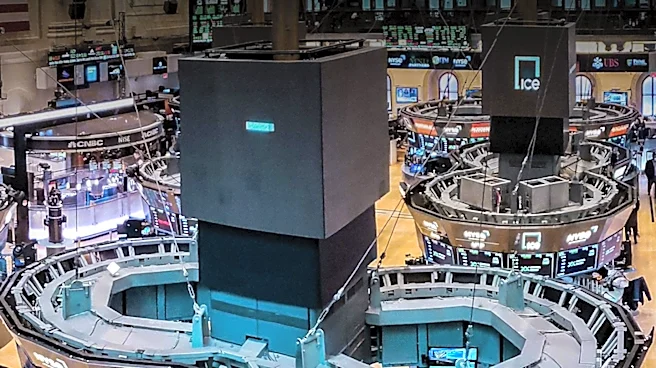
The performance of HYPE and the underlying Hyperliquid platform is significant for the broader cryptocurrency market and decentralized finance (DeFi) ecosystem. The HIP-3 upgrade, which allows for the creation of futures markets across diverse asset classes like stocks, cryptocurrencies, and commodities, positions Hyperliquid for substantial expansion. This move could attract a wider range of traders and developers, increasing the platform's utility and transaction volume. The requirement for developers to stake 500,000 HYPE tokens to launch an exchange, with a lock-up period of at least 183 days, creates a demand mechanism for HYPE and reduces its circulating supply, potentially supporting its value. Furthermore, the announced plans by Intercontinental Exchange (ICE), parent company of the New York Stock Exchange, to offer regulated futures trading in the U.S. using Hyperliquid's technology, if approved, could significantly legitimize and expand the platform's reach into traditional financial markets, attracting institutional investors and substantial capital flows. The integration with 1inch also broadens accessibility for retail users.
What's Next?
The future trajectory of HYPE in 2027 will likely be influenced by several key factors. The approval and launch of regulated futures trading in the U.S. by Intercontinental Exchange in partnership with Trade[XYZ], utilizing Hyperliquid's technology, could be a major catalyst. This development would open Hyperliquid to a vast new market of U.S. derivatives traders, potentially generating significant trading fees and increasing demand for HYPE. The success of developers in launching new futures markets under the HIP-3 upgrade will also be crucial, as more active markets would drive platform usage and fee generation. The continued integration of Hyperliquid's futures trading into other platforms, such as the recent addition to 1inch's app and Android wallet, will expand its user base and trading volume. However, the direct benefit to HYPE will depend on whether increased trading activity translates into more funds for token purchases by the Assistance Fund, as ICE's investment is in Trade[XYZ] and not directly in HYPE.
Beyond the Headlines
The evolution of Hyperliquid reflects a broader trend in the financial industry: the convergence of traditional finance (TradFi) and decentralized finance (DeFi). The potential entry of a major player like Intercontinental Exchange into the decentralized futures market via Hyperliquid's technology signals a growing acceptance and integration of blockchain-based solutions within regulated financial frameworks. This could set a precedent for how other established financial institutions engage with DeFi protocols, potentially leading to increased institutional adoption and regulatory clarity for decentralized trading platforms. The HIP-3 upgrade also highlights the increasing modularity and composability of DeFi, allowing for greater innovation and customization in financial product offerings. The shift in investor sentiment, valuing Hyperliquid's future growth over immediate fee income, suggests a maturing market that recognizes the long-term potential of infrastructure plays in the crypto space. This could lead to a re-evaluation of how decentralized exchanges are valued, moving beyond simple transaction fee metrics to include factors like technological innovation, ecosystem development, and strategic partnerships.