




What's Happening?
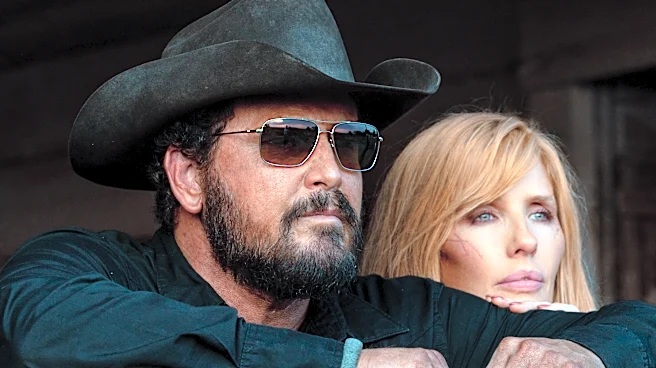
Lauren J. Salkin, a writer and journalist, has filed a lawsuit in the U.S. District Court for the Central District of California, claiming that Taylor Sheridan stole the concept for his popular Western series, 'Yellowstone.' Salkin alleges that she pitched
a show titled 'Sovereign Nation' to Sheridan's representatives, Elevate Entertainment, in 2016, which was subsequently rejected. According to Salkin, her pitch, described as a dramatic television series centered on tribal governance, casino-driven economic power, and a modern war over land and development, contained several ideas that later appeared in 'Yellowstone.' The lawsuit claims that Sheridan and his team used her copyrighted works to develop 'Yellowstone' despite stating he was 'unavailable for TV projects.' Salkin's suit specifically points to similarities such as a tribal casino as a center of power, a confrontation over expansion beyond reservation boundaries, and the use of trust land and 99-year lease structures for development. She also claims her casting ideas for actors Gil Birmingham and Danny Huston were stolen.
Why It's Important?
This lawsuit carries significant implications for the entertainment industry, particularly regarding intellectual property rights and the development process of major television productions. If Salkin's claims are substantiated, it could set a precedent for how pitches are handled and protected, potentially leading to increased scrutiny and legal challenges in an industry where ideas are highly valuable. For Taylor Sheridan, 'Yellowstone' is a cornerstone of his prolific career, and a ruling against him could damage his reputation and have substantial financial consequences, including damages, a share of profits, and injunctions against further infringement. The case also highlights the challenges faced by creators in protecting their original concepts when dealing with established industry figures and production companies. The outcome could influence how studios and creators approach collaborations and idea submissions, potentially leading to more stringent contractual agreements and clearer intellectual property safeguards.
What's Next?
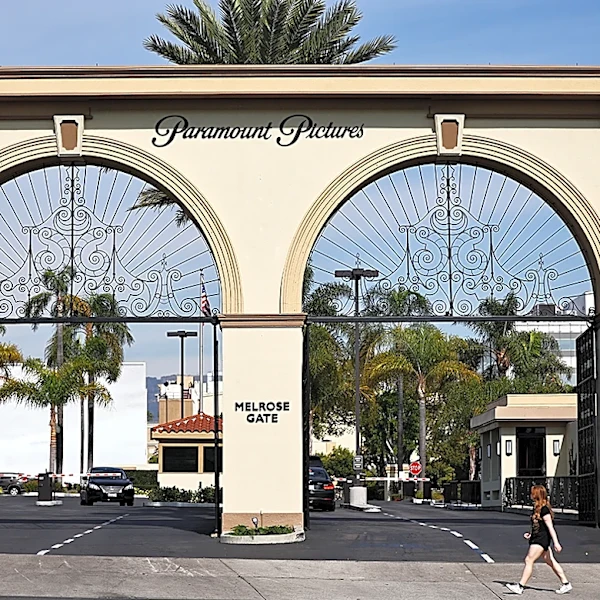
The U.S. District Court for the Central District of California will proceed with the lawsuit filed by Lauren J. Salkin against Taylor Sheridan and his management company, Elevate Entertainment. Paramount and NBCUniversal, who are involved with 'Yellowstone,' are also named as defendants. The legal process will likely involve discovery, where both sides will present evidence to support their claims. Sheridan's defense is expected to rely on his long-standing origin story for 'Yellowstone,' which attributes the show's creation to his personal experiences and an initial pitch to HBO. The court will need to determine if the similarities between 'Sovereign Nation' and 'Yellowstone' constitute copyright infringement, considering that copyright law does not protect abstract ideas but rather their specific expression. The case could either be settled out of court or proceed to trial, with potential appeals following any judgment. The resolution will be closely watched by industry professionals for its impact on intellectual property standards.
Beyond the Headlines
Beyond the immediate legal battle, this case touches upon broader ethical considerations within the creative industries. It raises questions about the fine line between inspiration and appropriation, and the power dynamics between established creators and emerging talent. The entertainment industry often operates on a system where pitches are frequently shared, and the potential for ideas to be inadvertently or intentionally borrowed is a constant concern for writers. This lawsuit could prompt a re-evaluation of industry practices regarding pitch submissions, non-disclosure agreements, and the documentation of creative development. It also underscores the subjective nature of creative ownership, as what one party considers a unique expression, another might view as a common trope. The outcome could influence how future collaborations are structured, potentially leading to more transparent and legally robust frameworks to protect intellectual property, thereby fostering a more equitable environment for all creators.