



What's Happening?
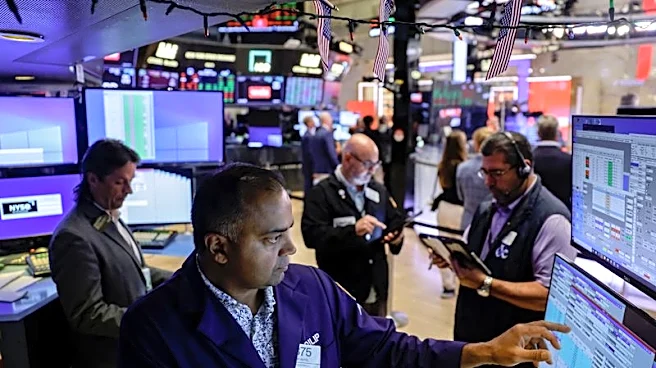
U.S. Treasury yields increased at the start of the week as oil prices surged and investors anticipated key economic data releases. The 10-year Treasury note yield rose by over 4 basis points, while the 30-year bond and 2-year note also saw increases.
This rise in yields coincides with a significant increase in oil prices, driven by uncertainty over U.S.-Iran negotiations regarding the Strait of Hormuz. President Trump indicated that the U.S. is 'only semi-negotiating' with Iran, contributing to market volatility. Investors are now focused on upcoming inflation data, including the consumer price index (CPI) and producer price index (PPI), which could influence Federal Reserve interest rate decisions. The recent weaker-than-expected jobs report has reduced the likelihood of immediate rate hikes, but inflation data could shift expectations.
Why It's Important?
The rise in Treasury yields reflects investor concerns about inflation and geopolitical tensions, particularly in the Middle East. Higher yields can lead to increased borrowing costs for the U.S. government and impact consumer interest rates, affecting mortgages, loans, and credit. The anticipation of inflation data is crucial as it will inform the Federal Reserve's monetary policy, potentially leading to interest rate adjustments. The outcome of U.S.-Iran negotiations could further influence global oil prices and economic stability. Investors and policymakers are closely watching these developments to gauge the future direction of the U.S. economy and financial markets.
What's Next?
The release of the July CPI and PPI data will be pivotal in shaping market expectations for Federal Reserve actions. A higher-than-expected inflation reading could increase the likelihood of a rate hike in September, while a lower reading might delay such a decision. Additionally, geopolitical developments, particularly regarding the Strait of Hormuz, will continue to impact oil prices and market sentiment. Investors will also monitor other economic indicators, such as retail sales and consumer sentiment, to assess the overall health of the U.S. economy.