








What's Happening?
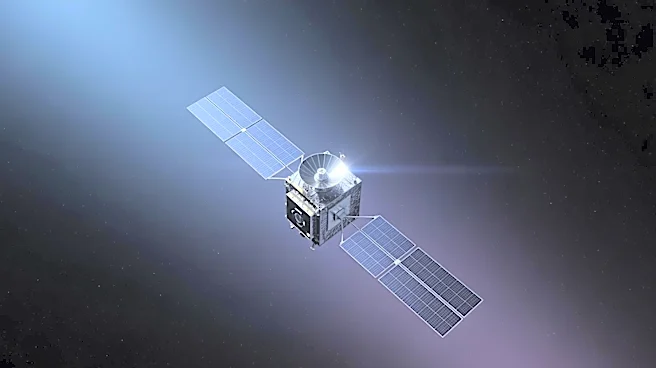
SpaceX has successfully launched three BlueBird direct-to-cell satellites for AST SpaceMobile from Cape Canaveral Space Force Station in Florida. The launch took place on June 17, 2026, at 2:39 a.m. EDT, using a Falcon 9 rocket. This mission, known as BlueBird 8-10,
aims to expand AST SpaceMobile's constellation in low Earth orbit, which provides internet service directly to cell phones. The Falcon 9 rocket's first stage returned to Earth approximately 8.5 minutes after launch, landing on the SpaceX drone ship 'A Shortfall of Gravitas' in the Atlantic Ocean. This marks the 29th launch and landing for this particular booster. The deployment of the three BlueBird satellites is expected to occur over a 10.5-minute span, beginning about 54.5 minutes after launch.
Why It's Important?
The successful launch of these satellites is a significant step for AST SpaceMobile in its mission to create a space-based cellular broadband network. By expanding its satellite constellation, the company aims to provide seamless broadband mobile connectivity directly to everyday smartphones, potentially revolutionizing internet access in remote and underserved areas. This development could have a substantial impact on global communication infrastructure, offering a new solution for internet connectivity that bypasses traditional ground-based networks. The success of this mission also demonstrates SpaceX's continued reliability in launching and landing reusable rockets, which is crucial for reducing the cost of space access.
What's Next?
Following the successful deployment of BlueBird 8, 9, and 10, AST SpaceMobile will continue to focus on expanding its satellite network to enhance its service capabilities. The company plans to launch additional satellites in the future to further increase coverage and capacity. Stakeholders, including telecommunications companies and consumers in remote areas, will be closely monitoring the performance of these new satellites. The success of this mission may also encourage further investment in space-based internet services, potentially leading to increased competition and innovation in the telecommunications industry.