






What's Happening?
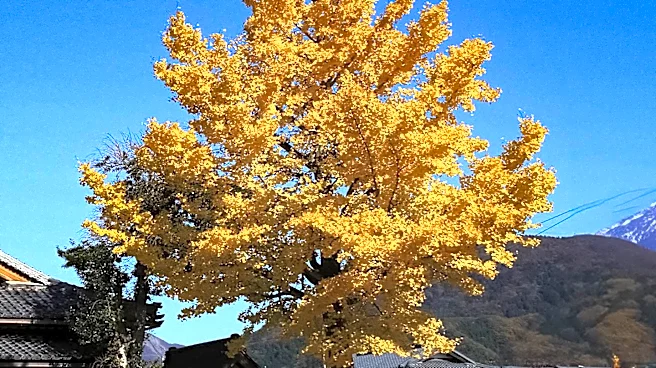
A gingko tree in Nagaoka, Japan, has recently garnered significant online attention due to its striking resemblance to Pikachu, the iconic Pokémon mascot. Located near Niigata Prefectural Road 171 and west of the Shibumigawa River, the tree's unique silhouette,
combined with its bright-yellow fall foliage, creates an uncanny likeness to the character. While the tree itself is not new, its Pikachu-like appearance became prominent only recently as its leaves changed color. This natural phenomenon has captivated internet users, with many expressing surprise and delight at the coincidence. Unlike planned art installations, there is no indication that this resemblance was intentionally created, making it a natural occurrence that has charmed observers.
Why It's Important?
This viral phenomenon highlights the power of natural occurrences to capture public imagination and generate widespread interest, particularly when they intersect with popular culture. The story demonstrates how unique visual coincidences can become significant cultural talking points, drawing attention to specific locations and fostering a sense of shared wonder. For the town of Nagaoka, this unexpected attention could potentially boost local tourism, as fans of Pokémon might be drawn to see the 'Pikachu tree' in person. It also underscores the global reach of franchises like Pokémon, where even an accidental natural mimicry can resonate deeply with a broad audience, transcending geographical boundaries and language barriers.
What's Next?
The gingko tree is expected to continue attracting visitors and online discussion as long as its leaves maintain their vibrant yellow hue. Local authorities or residents might need to manage increased foot traffic to the residential area where the tree is located, ensuring respect for private property and minimizing disruption. The tree's appearance next fall will likely be anticipated by many, curious to see if it will once again 'cosplay' as Pikachu. This event could also inspire similar observations of natural formations resembling pop culture figures, potentially leading to more viral content and local interest in unique natural landmarks.
Beyond the Headlines
Beyond its immediate viral appeal, the 'Pikachu tree' offers a fascinating example of pareidolia, the psychological phenomenon where the mind perceives a familiar pattern or image where none actually exists. In this case, the tree's natural form and seasonal coloring align perfectly with a globally recognized character, triggering widespread recognition and emotional connection. This incident also subtly reflects the human desire to find magic and wonder in the everyday, transforming a simple tree into a source of joy and amusement. It serves as a reminder of how nature can unexpectedly intersect with human creativity and cultural narratives, creating moments of shared delight and fostering a deeper appreciation for both the natural world and popular art.