




What's Happening?
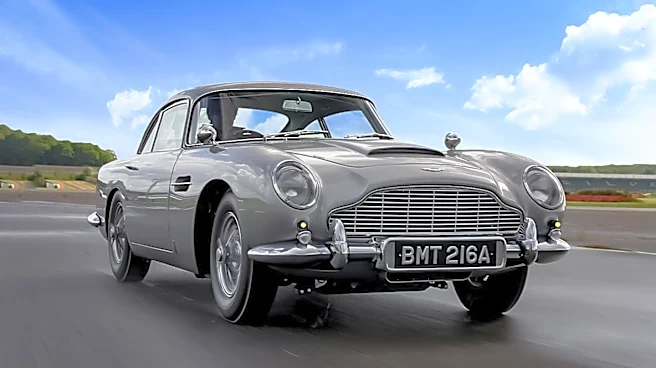
The Aston Martin DB5 gained its iconic status and significantly increased its collector value due to its appearance as James Bond's car in the 1964 film 'Goldfinger.' On September 17, 1964, the film's premiere introduced audiences to Sean Connery's James Bond driving
a Silver Birch DB5 equipped with various gadgets. This cinematic debut transformed the DB5 from a high-performance grand tourer into a global cultural icon. Before its Bond association, the DB5, introduced in 1963, was a well-regarded luxury sports car with a 4.0-liter straight-six engine producing 282 bhp (325 bhp in Vantage tune), capable of 0-60 mph in about 8 seconds and a top speed near 145 mph. Only 1,021 units were built over two years. The film's impact was so profound that Aston Martin dealers reported a surge in orders, and Corgi's die-cast toy of the car became Britain's best-selling toy that year. The factory even produced 25 new 'Goldfinger' DB5 Continuation cars in 2018, fitted with non-lethal reproductions of the film's gadgets, selling for over $3 million each.
Why It's Important?
The Aston Martin DB5's transformation into a cultural icon through its association with James Bond has had a profound and lasting impact on its value in the U.S. collector car market. This phenomenon demonstrates how popular culture can dramatically influence the desirability and financial worth of luxury goods. For collectors, a DB5 with verified EON Productions provenance or 'Goldfinger Continuation' status commands significantly higher prices, with auction records reaching over $6 million, compared to standard DB5s which typically sell for $650,000 to $1.3 million. This 'Bond premium' highlights the importance of narrative and historical context in the valuation of collectible assets. It also showcases Aston Martin's ability to leverage its brand heritage and iconic associations to create new, highly exclusive products like the Continuation series, generating substantial revenue and reinforcing its luxury image in the U.S. and global markets.
What's Next?
The enduring appeal of the James Bond franchise ensures that the Aston Martin DB5 will continue to hold a special place in the collector car market. Anniversary events, new Bond films, or significant milestones related to 'Goldfinger' are likely to trigger renewed interest and potentially further increase the value of Bond-associated DB5s. The market for the 25 'Goldfinger' DB5 Continuation cars, despite their inability to be road-registered in most markets, will be closely watched as a pure indicator of demand for the Bond association itself. This trend suggests that provenance and narrative will remain critical factors for collectors, often outweighing purely mechanical specifications. Aston Martin may continue to explore similar limited-edition projects that capitalize on its rich history and iconic cultural connections, further solidifying its position in the ultra-luxury and collector segments.
Beyond the Headlines
The Aston Martin DB5's journey from a luxury grand tourer to a global icon through its James Bond association reveals a deeper truth about value creation in the luxury market: it's not just about engineering excellence, but also about storytelling and cultural resonance. The car became a symbol of sophistication, adventure, and cutting-edge technology, transcending its mechanical attributes. This phenomenon highlights the power of media and entertainment to shape consumer desires and create aspirational objects. The 'Bond premium' also raises ethical and legal questions regarding the authenticity and reproduction of iconic vehicles, as aftermarket conversions and replica kits do not command the same value as officially sanctioned or historically verified models. This case study underscores the complex interplay between brand, narrative, and market dynamics, demonstrating how a fictional character can imbue a physical object with immense, enduring value, influencing collecting trends and brand strategies for decades.