

What's Happening?
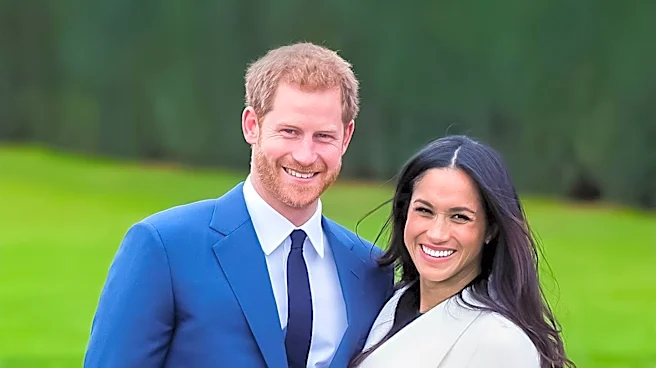
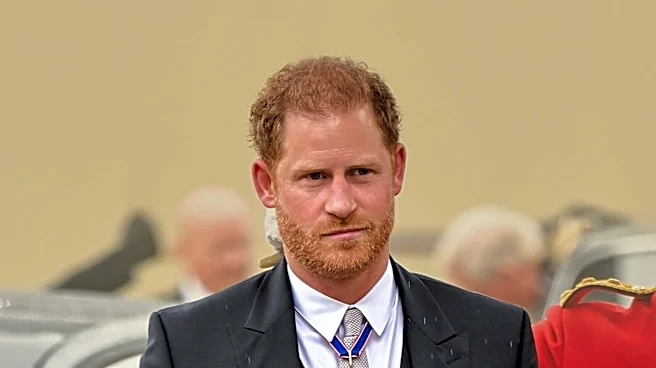
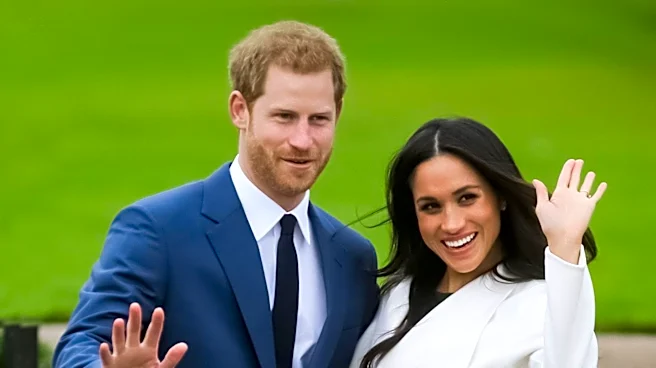
Veteran royal photographer Arthur Edwards has criticized Prince Harry and Meghan Markle for what he described as the 'sneaky' handling of their son Archie Mountbatten-Windsor's birth in May 2019. Speaking on the Daily Express's royal podcast 'Royals Unscripted,'
Edwards recounted the tightly controlled announcement surrounding Archie's arrival. He stated that while the public was informed Meghan had gone into labor around 2 PM, she had in fact given birth at 5 AM and was already on her way home from the hospital. Edwards contrasted this approach with previous royal births, where parents typically posed with their newborns for the media. He expressed frustration over the lack of transparency and the couple's perceived deviation from royal tradition, also lamenting that the faces of their children remain largely hidden from public view. Edwards suggested that this approach was 'Meghan's way' and not in line with traditional royal protocol.
Why It's Important?
Arthur Edwards's comments are important because they reflect a segment of public and media sentiment regarding Prince Harry and Meghan Markle's approach to privacy and their relationship with the press. As a long-serving royal photographer, Edwards represents a traditional perspective on how royal events, particularly births, are typically shared with the public. His criticism highlights the tension between the couple's desire for privacy and the public's expectation of access to royal family news. This divergence in expectations has been a recurring theme in the Sussexes' public life and contributes to the ongoing narrative surrounding their departure from working royal roles. The 'sneaky' label suggests a perceived lack of openness, which can impact public trust and media relations.
What's Next?
The criticism from figures like Arthur Edwards is likely to continue as long as Prince Harry and Meghan Markle maintain their current approach to privacy regarding their children and personal lives. The couple has consistently prioritized their family's privacy, a stance that contrasts sharply with traditional royal media engagement. This ongoing tension suggests that the media's desire for access and the couple's desire for protection will remain a point of contention. Future events involving their children, such as birthdays or rare public appearances, will likely be met with renewed scrutiny and commentary from both traditional royal observers and the broader public, further solidifying the distinct paths taken by the Sussexes and the Royal Family.
Beyond the Headlines
Beyond the immediate media critique, this situation delves into deeper questions about the evolving nature of royalty in the modern age and the right to privacy for public figures. The 'sneaky' accusation reflects a clash between the historical expectation of royal transparency and the contemporary desire for personal boundaries. It also highlights the power dynamics between the media and public figures, particularly those who choose to step away from traditional roles. The debate over Archie's birth and the visibility of royal children touches upon broader societal discussions about celebrity culture, the ethics of media coverage, and the balance between public interest and individual privacy. This ongoing narrative contributes to a redefinition of what it means to be 'royal' in the 21st century.