




What's Happening?
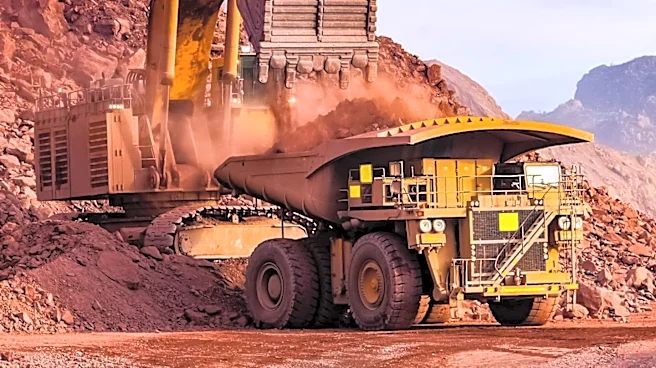
USA Rare Earth, a rare-earth mining company aiming for a mine-to-magnet business model, has begun generating revenue through its acquisition of the Brazilian Serra Verde mine. Production at Serra Verde started in 2024, and by October 2026, the mine commenced
shipping rare-earth materials to a U.S. government-backed buyer under a 15-year purchasing agreement. Despite this, the company reported approximately $3 million in revenue last quarter, falling short of Wall Street's expectations of $6.5 million. Concurrently, USA Rare Earth experienced a significant operating loss of about $141 million and an adjusted loss of $0.44 per share, which was more than double the $0.19 loss analysts had anticipated. The company's flagship project, the Round Top deposit in Texas, remains under development, with its commercial viability yet to be proven.
Why It's Important?
The financial performance of USA Rare Earth highlights the inherent risks and capital intensity associated with the rare-earth mining sector, even with government backing. The discrepancy between revenue generation and widening losses suggests that the path to profitability for early-stage critical mineral companies can be protracted and challenging. This situation is particularly relevant given the U.S. government's strategic interest in securing a domestic supply chain for rare-earth elements, which are crucial for various advanced technologies and national security applications. The company's struggles, despite a long-term purchasing agreement, could influence future government investment strategies and private sector willingness to fund similar ventures, especially in a market characterized by macroeconomic headwinds and rising interest rates. The unproven commercial viability of the Round Top deposit further underscores the speculative nature of such investments.
What's Next?
USA Rare Earth will need to address its widening losses and demonstrate a clearer path to profitability. The commercial viability of its flagship Round Top deposit in Texas remains a critical factor; its development will require substantial capital. Rising interest rates could make future borrowing more expensive, potentially forcing the company to issue more shares and dilute existing investors. The company's ability to meet future revenue expectations and control operating costs will be closely watched by investors and analysts. The ongoing 15-year purchasing agreement with a U.S. government-backed buyer provides a stable revenue stream, but its impact on overall profitability will depend on the company's operational efficiency and the successful development of its mining projects.
Beyond the Headlines
The challenges faced by USA Rare Earth reflect broader issues within the critical minerals industry, particularly the tension between national security imperatives and economic realities. While rare-earth metals are vital for modern technology and defense, the high upfront costs, long development cycles, and environmental considerations of mining projects often deter private investment. The U.S. government's involvement through purchasing agreements signals a recognition of this strategic need, but it also highlights the difficulty of establishing a robust domestic supply chain without significant and sustained financial support. The company's situation could serve as a case study for policymakers evaluating the effectiveness of current incentives and the need for more comprehensive strategies to de-risk critical mineral projects and attract necessary capital.