










What's Happening?
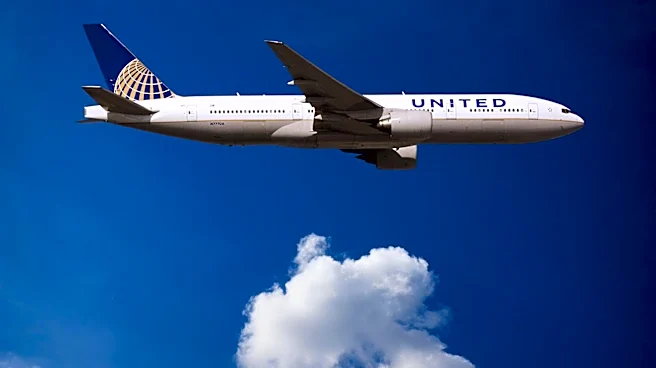
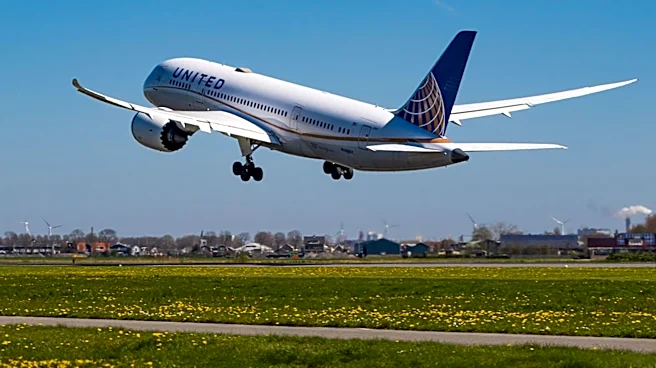
United Airlines reported second-quarter earnings that exceeded Wall Street expectations, with adjusted earnings per share at $1.99 compared to the expected $1.88. Revenue also surpassed estimates, reaching $17.67 billion. However, the airline faces significant
challenges due to rising fuel costs, which are expected to add $6 billion to expenses this year. Jet fuel prices have surged by 34% in July, driven by geopolitical tensions between the U.S. and Iran. United plans to cover up to 90% of these additional costs in the third quarter and all of them in the fourth quarter. Despite higher fares, demand remains strong.
Why It's Important?
The rising fuel costs present a major financial challenge for United Airlines, impacting its profitability and operational strategies. The airline's ability to manage these costs while maintaining strong demand highlights its resilience and strategic planning. The situation underscores the broader impact of geopolitical tensions on the airline industry, particularly in terms of fuel price volatility. United's performance and cost management strategies will be closely watched by investors and industry analysts, as they could influence future pricing and capacity decisions across the sector.
What's Next?
United Airlines is expected to continue adjusting its financial forecasts and operational strategies in response to fluctuating fuel prices. The airline may further revise its capacity plans if fuel costs remain high. United's upcoming earnings call will provide more insights into its strategies for managing these challenges. The airline industry as a whole will be monitoring geopolitical developments and fuel price trends, as these factors will significantly influence future operational and financial decisions.