



What's Happening?
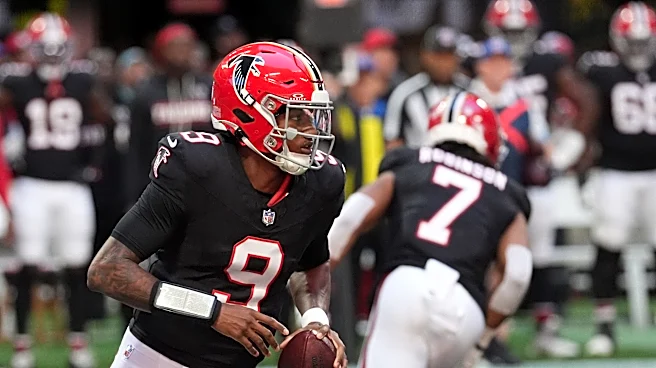
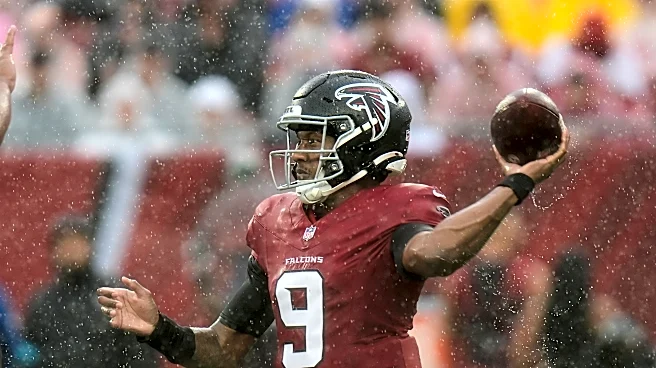
Atlanta Falcons rookie linebacker Harold Perkins Jr. experienced a difficult outing in the team's recent loss to the Tampa Bay Buccaneers. During the game, Perkins Jr. struggled to disengage from blocks and missed several tackles, contributing to the Falcons'
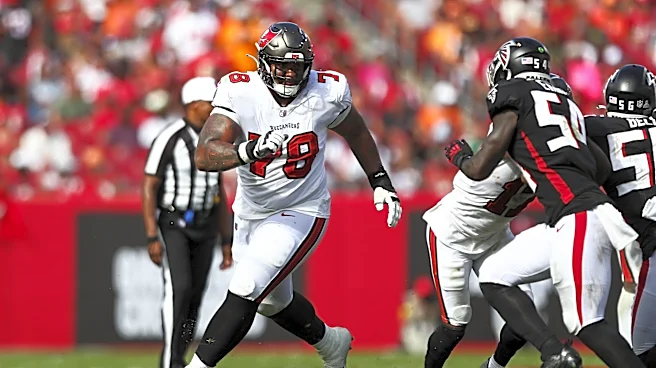
defensive challenges. This performance was part of a broader struggle for the Falcons' rookie linebacker tandem, which faced an overmatched situation against the Buccaneers' physically imposing offensive line and effective run game. The Falcons' defense, particularly the front seven, was unable to contain Tampa Bay's ground attack, allowing significant yardage and contributing to a one-sided defeat. Perkins Jr., drafted from LSU, is a key component of the Falcons' linebacker corps, and his recent struggles highlight the developmental curve for young players in the NFL. The team's overall performance in the game was characterized by self-inflicted errors and personnel breakdowns, with the defense particularly vulnerable in the trenches.
Why It's Important?
Harold Perkins Jr.'s performance is significant for the Atlanta Falcons as it underscores the challenges faced by young defensive players in adapting to the NFL's physicality and speed. As a starting rookie linebacker, Perkins Jr. is expected to be a crucial part of the team's defensive future. His struggles in shedding blocks and making tackles against a strong running team like the Buccaneers reveal areas for improvement that are critical for his development and the team's defensive efficacy. The Falcons' inability to stop the run game, partly due to the difficulties faced by players like Perkins Jr., directly impacts their competitiveness, especially in divisional games. For the Falcons, the performance raises questions about the immediate readiness of their young defensive talent and the need for strategic adjustments or further development to bolster their run defense. The team's long-term defensive strategy and personnel decisions will likely be influenced by the progression of key young players like Perkins Jr.
What's Next?
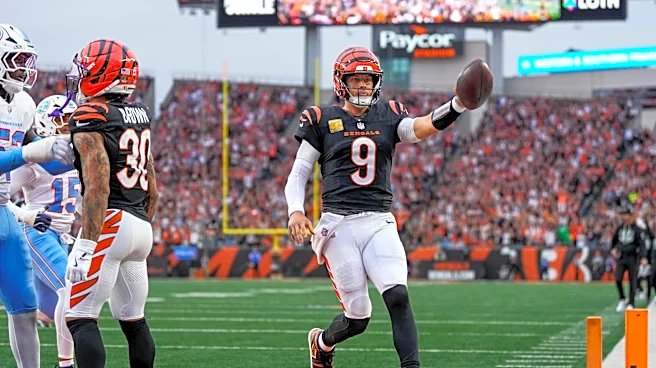
Following his challenging performance, Harold Perkins Jr. and the Falcons' defense will face another significant test in their upcoming game against the Cincinnati Bengals, a team known for its potent offense. This matchup will provide an immediate opportunity for Perkins Jr. to demonstrate improvements in his play, particularly in his ability to get off blocks and execute tackles. The coaching staff will likely focus on addressing the defensive line's and linebackers' issues in stopping the run and maintaining gap integrity. For Perkins Jr., continued development in these areas will be crucial for solidifying his role as a starting linebacker. The Falcons may also consider strategic adjustments to their defensive schemes or personnel rotations to better support their young linebackers against strong offensive fronts. His performance in the upcoming game will be closely watched as an indicator of his progress and the defense's overall trajectory.
Beyond the Headlines
The struggles of a highly touted rookie like Harold Perkins Jr. extend beyond individual performance, reflecting broader trends in player development and team building in the NFL. The transition from college to professional football often presents significant challenges, particularly for defensive players who must adapt to more complex schemes and physically dominant opponents. For the Falcons, investing in young talent like Perkins Jr. is a long-term strategy, and his current difficulties highlight the patience and sustained coaching required to nurture such prospects. This situation also brings into focus the balance between relying on young, developing players and the immediate need for competitive performance. The team's approach to supporting Perkins Jr. through his early career challenges will be a testament to their player development philosophy and could influence how other young players are integrated into the team. Ultimately, his journey reflects the demanding nature of professional sports and the continuous process of growth required at the highest level.