






What's Happening?
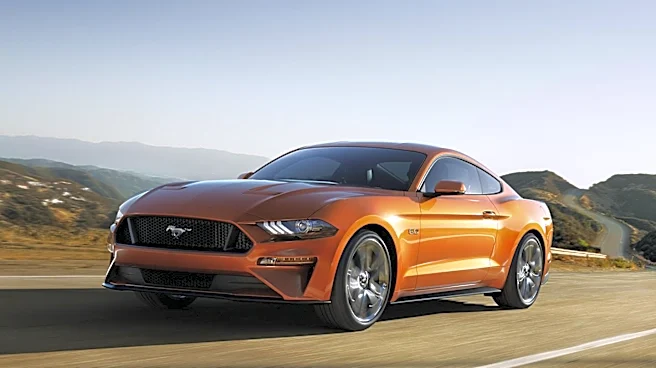
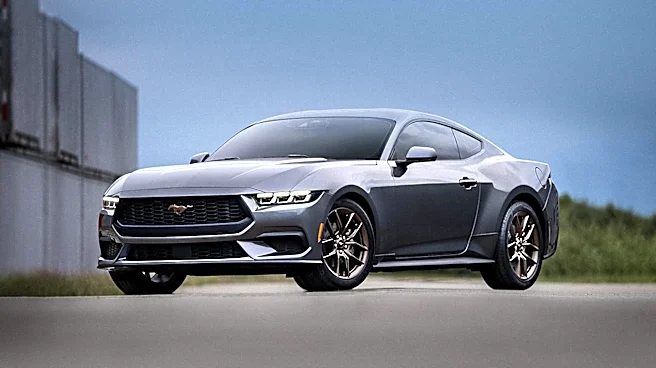
Ford Motor Co. has revealed plans to introduce a four-door Mustang sportscar, as disclosed during a dealer meeting in Las Vegas. This move marks Ford's strategy to leverage its iconic Mustang nameplate to expand its market presence. The new model, expected
to feature a gas-powered engine with a potential hybrid option, is anticipated to hit showrooms by the end of the decade. This development comes as Ford aims to capitalize on its historical model names like Mustang, Bronco, and F-150 to boost sales and profit margins. The four-door Mustang is seen as a direct competitor to the Dodge Charger, which offers both two-door and four-door variants. Ford's decision to re-enter the sedan market follows its 2018 announcement to exit passenger cars, except for the Mustang, due to declining sales.
Why It's Important?
The introduction of a four-door Mustang represents a significant shift in Ford's product strategy, potentially revitalizing its presence in the sedan market. By expanding the Mustang lineup, Ford aims to attract a broader customer base, including those seeking the performance of a Mustang with the practicality of a sedan. This move could enhance Ford's competitive edge against rivals like Stellantis, which recently relaunched the Dodge Charger. Additionally, the decision aligns with Ford's broader strategy to focus on iconic models, which could lead to increased brand loyalty and market share. However, there is a risk of diluting the Mustang brand, which has traditionally been associated with two-door coupes and convertibles.
What's Next?
Ford's plan to introduce a four-door Mustang is part of a broader strategy to offer hybrid or multi-energy powertrain options across nearly all its vehicles by the end of the decade. The company also plans to launch five new affordable vehicles, four of which will be assembled in the U.S. As Ford continues to innovate within its iconic model lines, it will likely face scrutiny from automotive purists concerned about brand dilution. The success of the four-door Mustang will depend on its ability to balance traditional Mustang performance with the practicality expected from a sedan. Ford's ongoing emphasis on leveraging its historical model names suggests a continued focus on brand strength and market expansion.