






What's Happening?
Archer Aviation, a California aerospace company, has unveiled plans for an electric air taxi network in Houston, Texas. This network aims to connect major airports, including George Bush Intercontinental Airport, William P. Hobby Airport, and Sugar Land
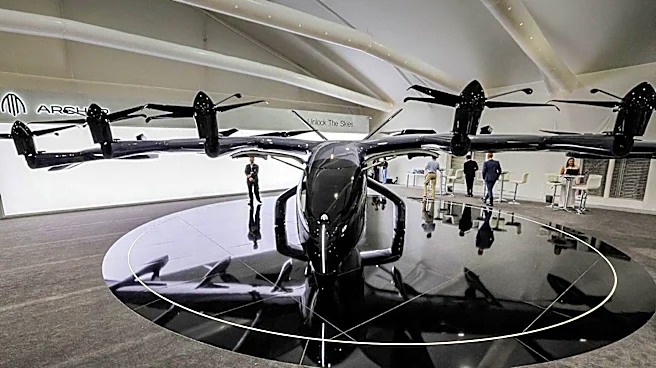
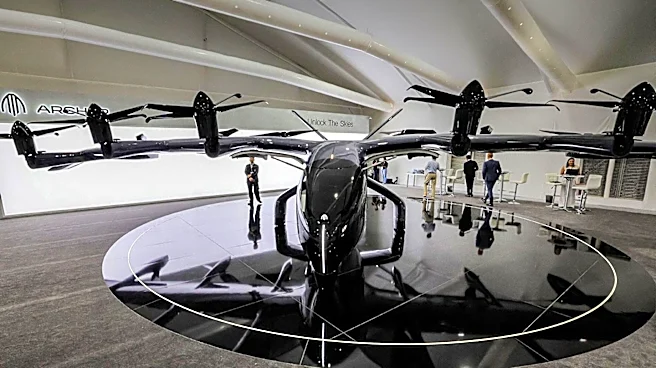
Regional Airport, with downtown Houston's Thompson Hotel helipad and Galveston. The company also intends to establish similar air taxi networks in Austin and Dallas-Fort Worth. Archer Aviation will utilize its 12-propeller all-electric vertical takeoff and landing (eVTOL) aircraft, the Midnight, for these services. Demonstration flights are anticipated to commence as early as next year in Houston, Dallas, and Austin. Sugar Land Regional Airport is actively pursuing a vertiport design project, with a goal of initiating operations by 2030, according to Director of Aviation Mitchell Davies. Archer's Chief Commercial Officer, Nikhil Goel, stated that the company is targeting fares comparable to Uber Black pricing, potentially costing $100 or more depending on the distance.
Why It's Important?
The development of Archer Aviation's air taxi network in major Texas cities signifies a significant step towards integrating eVTOL technology into urban transportation. This initiative could drastically reduce travel times, transforming commutes that typically take 60 to 90 minutes by car into 10 to 20-minute flights. The company highlights that road congestion cost the Houston region nearly $7.3 billion in 2024, according to the Texas A&M Transportation Institute's 2025 Urban Mobility Report, suggesting that air taxis could offer a solution to this economic burden. The planned networks in Houston, Austin, and Dallas-Fort Worth position Texas as a key early adopter of urban air mobility, potentially influencing regulatory frameworks and infrastructure development for eVTOL services across the U.S. The targeted pricing model, similar to premium ride-sharing services, indicates an initial focus on a segment of the population willing to pay for speed and convenience, while also setting a precedent for future pricing strategies in the nascent air taxi market.
What's Next?
Archer Aviation anticipates beginning demonstration flights for its air taxi services as early as next year in Houston, Dallas, and Austin. Sugar Land Regional Airport is actively working on a vertiport design project, with an operational target of 2030. The successful implementation of these demonstration flights and the development of necessary infrastructure, such as vertiports, will be crucial next steps. Regulatory bodies will also need to continue developing and refining guidelines for eVTOL operations, including air traffic management and safety protocols. The company's ability to secure further partnerships and funding will also play a vital role in scaling its operations. As these networks develop, other cities across the U.S. may look to Texas as a model for integrating urban air mobility solutions, potentially leading to broader adoption and competition in the eVTOL market.
Beyond the Headlines
The introduction of air taxi networks like Archer Aviation's could have profound long-term implications beyond simply reducing travel times. Environmentally, the all-electric nature of the Midnight aircraft aligns with growing demands for sustainable transportation solutions, potentially contributing to reduced carbon emissions in urban areas. Socially, the accessibility and cost of these services will determine their broader impact. While initial pricing targets a premium market, future cost reductions could make air taxis more widely available, altering urban planning and commuting patterns. The development of vertiports and associated infrastructure will also necessitate careful consideration of land use, noise pollution, and community integration. Furthermore, the success of these early networks could accelerate investment in eVTOL technology and infrastructure, fostering a new sector within the aerospace and transportation industries and potentially creating new job opportunities.