






What's Happening?
Entergy Louisiana is preparing for a significant expansion of its energy infrastructure over the next five years to meet the escalating demand from artificial intelligence data centers and industrial projects. The company's President and CEO, Phillip
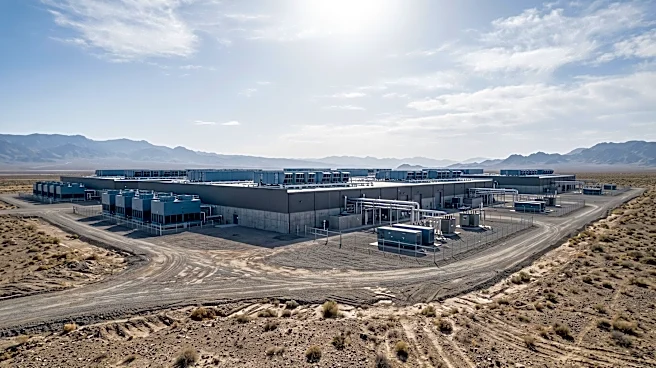
May, indicated that Entergy Louisiana plans to essentially double its existing operational scale within this timeframe. A major component of this expansion is a submitted application for over $14 billion in generation and transmission infrastructure specifically tied to the planned Meta Hyperion data center campus in Richland Parish. This campus is projected to require up to 4,500 megawatts of power. The Louisiana Public Service Commission (LPSC) adopted the 'Lightning Speed Initiative' in December 2025 to fast-track approvals for utility projects linked to large economic development investments, following an executive order from Gov. Jeff Landry. However, three nonprofit groups—the Louisiana Landowners Coalition, Louisiana Citizen Advocacy Group, and Save My Louisiana—filed a lawsuit on November 9, 2026, alleging that the LPSC violated constitutional notice requirements when adopting this initiative, thereby limiting public input on decisions affecting rates and property. The LPSC is scheduled to consider Entergy's application at its December 8 meeting.
Why It's Important?
This massive infrastructure buildout by Entergy Louisiana is crucial for positioning the state as a competitive hub for AI-related investments, particularly with the development of Meta's Hyperion data center campus. The project signifies a substantial shift in how the utility approaches long-term system planning, requiring extensive coordination across departments and with external partners to maintain service reliability while adding significant new capacity. The legal challenge to the 'Lightning Speed Initiative' highlights a tension between expedited economic development and the need for public input and ratepayer protection. The outcome of this lawsuit and the LPSC's decision on Entergy's application will set precedents for how quickly new energy capacity can be brought online in Louisiana and how associated costs are allocated. This situation also reflects a broader national trend where utilities are grappling with unprecedented power demands from data centers, necessitating rapid and large-scale infrastructure investments that could impact electricity rates and environmental considerations for residents.
What's Next?
The immediate next step is the Louisiana Public Service Commission's meeting on December 8, where it will consider Entergy Louisiana's application for the $14 billion infrastructure project. Concurrently, the lawsuit filed by the three nonprofit groups challenging the 'Lightning Speed Initiative' will proceed in Baton Rouge state court, with its outcome potentially influencing the regulatory process for this and future projects. Stakeholders, including utilities, regulators, advocacy groups, and local communities, will closely monitor these developments to understand how economic development priorities will be balanced with ratepayer protections and environmental safeguards. The state's updated Data Center Sales and Use Tax Exemption, announced on October 29, 2026, will also play a role, as applicants must now demonstrate commitments to avoiding increased costs for ratepayers, bolstering grid reliability, protecting natural resources, and investing in local workforces. The implementation of these new stipulations will be critical in shaping the long-term impact of data center growth in Louisiana.
Beyond the Headlines
The situation in Louisiana with Entergy and Meta underscores a growing national challenge: the immense power demands of AI data centers are forcing utilities and regulators to rethink traditional infrastructure planning and approval processes. The 'Lightning Speed Initiative' exemplifies a trend towards fast-tracking projects deemed economically vital, potentially at the expense of established public review procedures. This raises fundamental questions about democratic participation in infrastructure decisions that have long-term impacts on communities and the environment. The debate over who bears the cost of these massive expansions—ratepayers, data center operators, or a combination—will likely intensify. Furthermore, the emphasis on workforce development and environmental safeguards in the updated tax break framework suggests a recognition that economic growth must be balanced with broader societal and ecological responsibilities. This case could serve as a blueprint or a cautionary tale for other states grappling with similar pressures from the burgeoning AI industry.