


What's Happening?
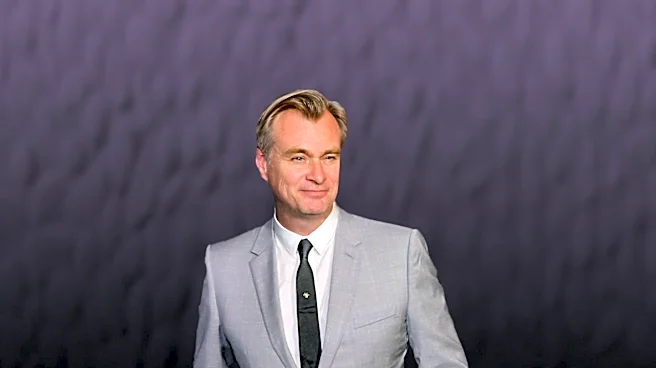
In the ongoing debate over artificial intelligence (AI) in filmmaking, prominent directors Christopher Nolan and George Lucas have expressed contrasting views. Nolan, known for his traditional filmmaking techniques, has criticized AI as a 'Trojan Horse,'
suggesting that it is rapidly advancing yet widely rejected by the public, particularly among young people. In contrast, Lucas, the creator of Star Wars, views AI as the future of filmmaking, dismissing concerns as mere Luddism. This debate highlights a generational divide in Hollywood, with Nolan's recent success with 'The Odyssey'—a film made using traditional methods—contrasting with the industry's increasing interest in AI-driven production techniques. The discussion is part of a broader conversation about the role of AI in creative industries, with some filmmakers embracing new technologies while others remain cautious.
Why It's Important?
The differing perspectives of Nolan and Lucas on AI in filmmaking underscore a significant shift in the entertainment industry. As AI technology continues to evolve, it presents both opportunities and challenges for filmmakers. On one hand, AI can streamline production processes and create new possibilities for storytelling. On the other hand, there is concern that over-reliance on AI could undermine the artistry and human creativity that define cinema. The debate also reflects broader societal concerns about AI's impact on jobs and creativity. As Hollywood navigates these changes, the industry's approach to AI could influence public perception and acceptance of the technology, potentially affecting its integration into other sectors.
What's Next?
As the debate over AI in filmmaking continues, industry stakeholders are likely to explore new partnerships and collaborations to balance technological innovation with creative integrity. Companies like Netflix and Google are already investing in AI-driven projects, indicating a trend towards integrating AI into the filmmaking process. However, the success of traditional films like 'The Odyssey' suggests that there is still a strong audience demand for films that prioritize human creativity. Moving forward, Hollywood may need to find a middle ground that leverages AI's benefits while preserving the artistic elements that resonate with audiences. This balance will be crucial as the industry adapts to technological advancements and changing consumer preferences.
Beyond the Headlines
The debate over AI in Hollywood is not just about technology but also about the cultural and ethical implications of its use. As AI becomes more prevalent, questions about intellectual property, data privacy, and the potential for AI to replace human jobs are becoming increasingly relevant. The entertainment industry, with its high visibility and cultural influence, is uniquely positioned to shape public discourse on these issues. How Hollywood addresses these challenges could set precedents for other industries grappling with similar concerns. Additionally, the industry's response to AI could influence regulatory approaches and public policy decisions related to technology and innovation.