






What's Happening?
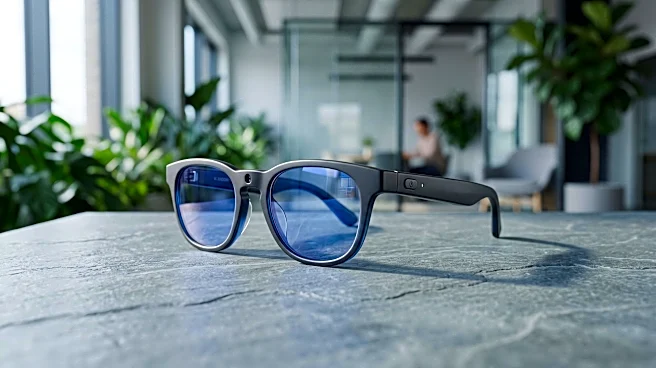
Meta Platforms is confronting a new legal challenge in Europe concerning its smart glasses. Dutch consumer protection and digital rights organizations have filed a request with an Amsterdam court to halt the sale of these devices in the Netherlands. The
organizations allege that Meta's smart glasses violate European privacy regulations, specifically regarding the ability to record videos and capture images of individuals without their knowledge. This legal action follows similar concerns raised in Germany by the country's national consumer federation and a recent advisory from the Dutch privacy watchdog against purchasing smart glasses. Meta has publicly disputed these allegations, asserting that its recording indicator is sufficient and denying any unlawful processing of captured images for training its models. The company views wearable technology as a crucial new computing platform, making this legal battle significant for its future growth strategies.
Why It's Important?
This legal challenge is significant for Meta Platforms as it directly impacts one of CEO Mark Zuckerberg's key growth initiatives beyond social media advertising. The smart glasses market, where Meta and its partner EssilorLuxottica reportedly sold over 7 million units in 2025, represents a substantial investment for the company. The privacy concerns raised highlight a fundamental difference between smart glasses and smartphones: the embedded cameras in everyday eyewear create a more complex privacy challenge, as people may not realize they are being recorded. A sales ban in the Netherlands, while potentially having limited immediate financial consequences, could set a precedent for similar restrictions in larger European markets. Such widespread restrictions would severely undermine Meta's ambitions to establish a meaningful business in wearable technology outside of its core digital advertising revenue, impacting its Reality Labs division which already reported a $4.13 billion operating loss in Q3 2026.
What's Next?
Investors and stakeholders are closely monitoring the situation, with the Dutch court expected to deliver its ruling by December 24, 2026. Beyond this immediate legal outcome, the focus will be on Meta's hardware sales performance and the operating losses of its Reality Labs division. The potential for similar restrictions to be imposed in other European markets is a critical factor to watch, as this could significantly impede Meta's expansion in the wearable technology sector. The company will likely continue to defend its privacy practices and may need to adapt its product features or marketing strategies to address evolving regulatory and consumer privacy expectations across Europe. The outcome of this case could influence future product development and market entry strategies for other tech companies in the wearable device space.
Beyond the Headlines
The legal challenge against Meta's smart glasses delves into deeper ethical and societal implications surrounding privacy in an increasingly connected world. The core issue revolves around the balance between technological innovation and individual privacy rights, particularly when technology allows for discreet recording in public spaces. This case could contribute to the development of new legal frameworks and societal norms for wearable recording devices. It highlights the ongoing tension between companies seeking to integrate technology seamlessly into daily life and the public's demand for transparency and control over their personal data and image. The outcome may influence how future wearable technologies are designed, regulated, and adopted, potentially leading to stricter privacy-by-design principles and greater public awareness campaigns regarding the use of such devices.