



What's Happening?
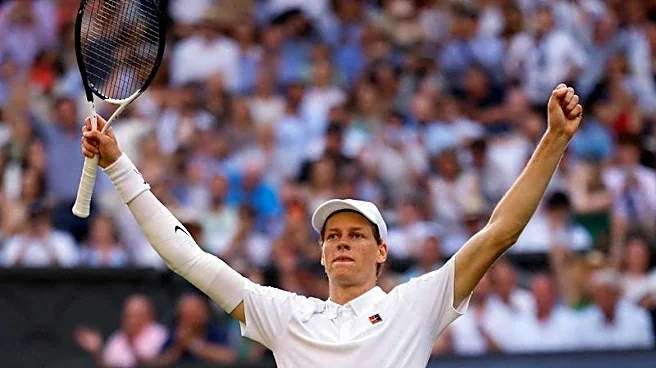
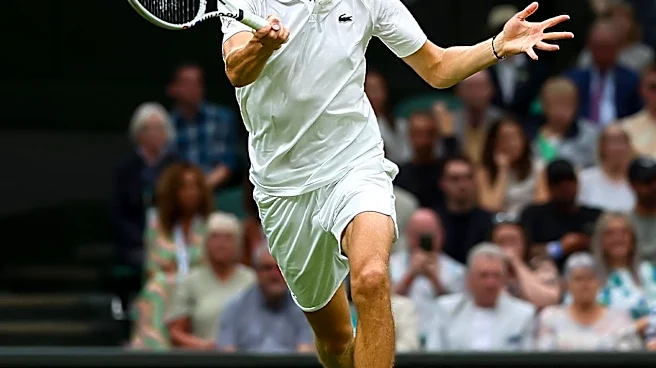
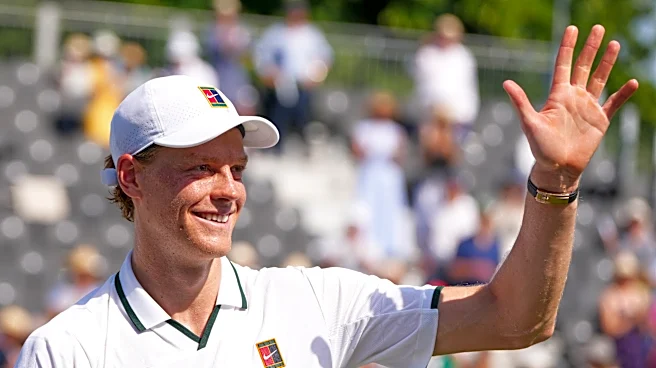
Jannik Sinner, the top-ranked tennis player, made a brief media appearance at Wimbledon, where a prize-money protest by top players is ongoing. The protest, which began at the French Open, involves players limiting their media interactions to 15 minutes
per match during the first week of Wimbledon. The players are demanding a larger share of tournament revenues, which led Wimbledon to increase its prize money by 20%. Despite this, Sinner emphasized his desire to focus on tennis rather than the protest. He acknowledged improvements in negotiations but noted that players are not yet fully satisfied. Sinner also highlighted the need for better player welfare, beyond just financial concerns.
Why It's Important?
The protest at Wimbledon underscores a significant issue in professional tennis regarding the distribution of tournament revenues. Players argue that their share of the revenue is insufficient, with the current share at Wimbledon being 14.4%, slightly less than a decade ago. This situation highlights broader concerns about financial equity in sports, where athletes seek fair compensation relative to the income generated by major events. The outcome of these negotiations could set a precedent for future revenue-sharing models in tennis and other sports, potentially impacting how athletes are compensated globally.
What's Next?
As the protest continues, further negotiations between players and tournament organizers are expected. The players' advisory firm has indicated that the protest will persist during the first week of Wimbledon. The All England Club, which organizes Wimbledon, expressed surprise and disappointment at the protest. The resolution of this issue could involve the establishment of a player council to address such concerns more effectively. The ongoing discussions may lead to changes in how revenue is distributed in future tournaments, affecting both players and organizers.