






What's Happening?
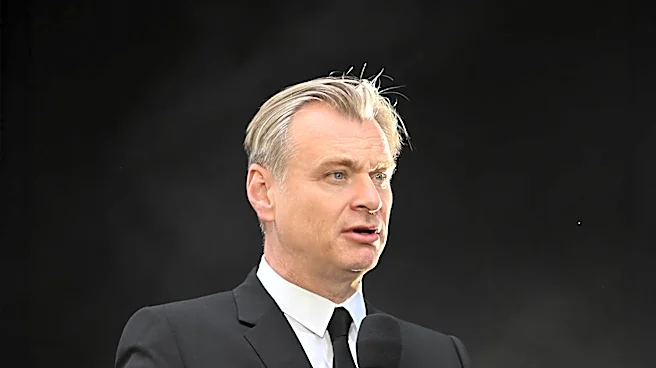
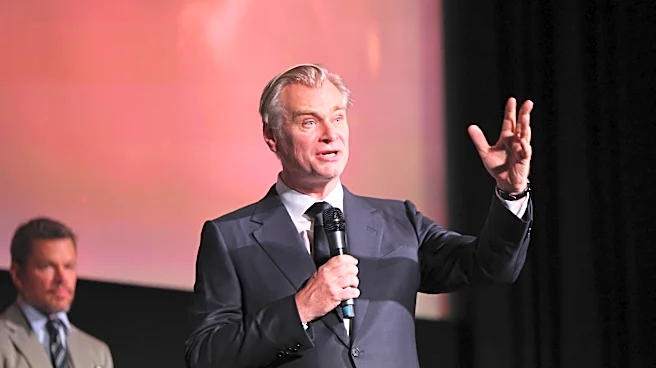
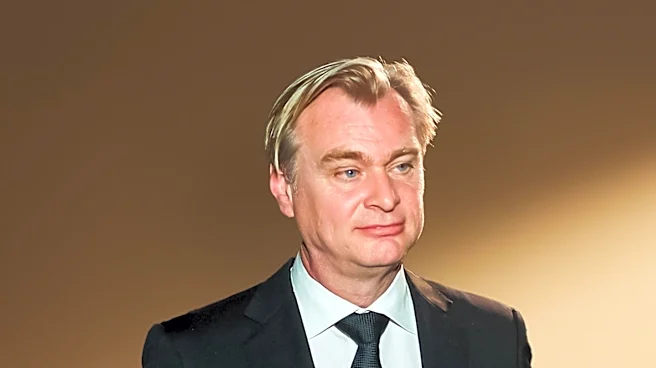
Christopher Nolan, renowned for his meticulous filmmaking style, has once again sparked discussion regarding his on-set practices. The debate centers around Nolan's aversion to chairs on set, a topic that gained attention in 2020 when actress Anne Hathaway
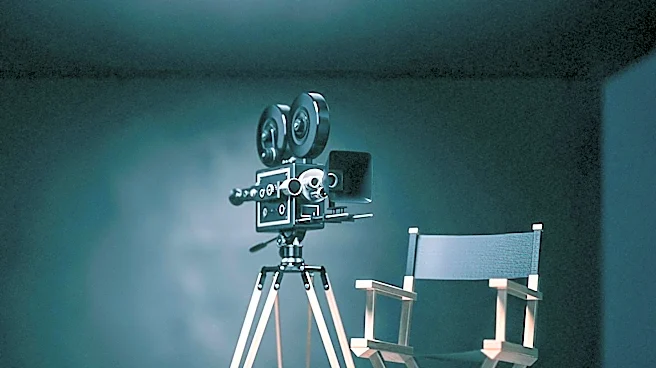
mentioned that Nolan does not allow chairs, reasoning that if people sit, they are not working. This statement led to a social media debate about workplace accessibility and comfort. Recently, actor Matt Damon reiterated this claim during a YouTube series episode, stating that there are no chairs on Nolan's sets. However, Nolan's representatives clarified that the restriction applies mainly to director's chairs around video monitors, and that cast and crew are free to sit as needed.
Why It's Important?
The discussion about Nolan's set practices highlights broader issues of workplace accessibility and comfort in the film industry. While some view the absence of chairs as a motivational tool to keep the crew active, others argue it raises concerns about the physical demands placed on workers. This debate underscores the need for balancing productivity with employee well-being, a topic relevant across various industries. The clarification from Nolan's representatives suggests an awareness of these concerns, indicating a potential shift towards more inclusive practices in high-pressure work environments.
What's Next?
As the conversation about set practices continues, it may prompt other filmmakers and industry leaders to reevaluate their own approaches to workplace comfort and accessibility. This could lead to broader discussions within the industry about setting standards that prioritize both efficiency and employee health. Stakeholders, including unions and advocacy groups, might push for clearer guidelines to ensure that film sets are accommodating to all workers, potentially influencing future productions.
Beyond the Headlines
The controversy over Nolan's set practices also touches on the cultural perception of work ethic in creative industries. Nolan's approach reflects a traditional view that associates constant activity with productivity. However, as discussions about mental health and work-life balance gain traction, there may be a cultural shift towards valuing rest and comfort as integral to creative processes. This could lead to a reevaluation of what constitutes effective work environments in the arts and beyond.