






What's Happening?
Bitcoin and gold have reached an unprecedented level of correlation, with a 90-day correlation between the two assets climbing to an all-time high of 0.56 on October 22, according to Galaxy Research. This surpasses the previous peak of 0.50 set on November
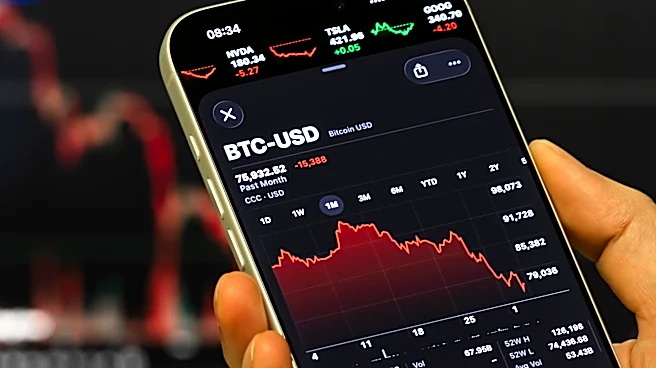
6, 2020. As of November 23, the 90-day correlation stood at 0.54, while the shorter 30-day measure rose to 0.59. This increased correlation indicates that the daily price movements of Bitcoin and gold are aligning more frequently than ever before. Historically, from 2020 through 2025, this measure averaged only 0.11. The correlation began to rise in July and exceeded 0.50 in early October. This trend challenges the long-held argument within the crypto community that Bitcoin acts as 'digital gold,' a hedge that moves independently of traditional risk assets. Over the past three months, both Bitcoin and gold have largely declined together, moving in tandem with U.S. equities.
Why It's Important?
The record correlation between Bitcoin and gold significantly complicates the investment thesis for holding Bitcoin as portfolio insurance. Traditionally, investors have viewed gold as a safe-haven asset that hedges against stock market losses. If Bitcoin is now moving in lockstep with gold and, by extension, with U.S. equities, its role as a diversifier or an independent hedge is diminished. This means that instead of offsetting risk in a portfolio, Bitcoin is currently adding to it, behaving more like a risk asset. This shift could lead investors to re-evaluate their asset allocation strategies, potentially reducing Bitcoin's appeal for those seeking diversification. The development also highlights a broader market trend where assets traditionally seen as hedges are offering less protection, as gold itself has been trading alongside equities, and U.S. Treasuries are reclaiming their hedging role.
What's Next?
The sustained high correlation between Bitcoin and gold will likely prompt further scrutiny from institutional investors and financial analysts regarding Bitcoin's long-term utility as a portfolio diversifier. If this trend continues, it could lead to a re-pricing of Bitcoin as its perceived value as a 'digital gold' diminishes. Market participants will be closely watching whether this correlation is a temporary phenomenon driven by current macroeconomic conditions, such as the rising dollar and shifting risk appetites, or if it represents a more fundamental change in Bitcoin's market behavior. A continued high correlation could also influence regulatory perspectives on cryptocurrencies, potentially leading to different classifications or oversight if Bitcoin is increasingly seen as a risk asset rather than a unique, uncorrelated asset class. Investors will be looking for signs of decoupling, such as gold and Bitcoin moving in opposite directions over a sustained period, to re-establish Bitcoin's independent value proposition.
Beyond the Headlines
This record correlation challenges a foundational narrative within the cryptocurrency space, forcing a re-evaluation of Bitcoin's intrinsic properties and market behavior. The 'digital gold' moniker has been a powerful marketing and investment thesis, attracting both retail and institutional capital. If Bitcoin consistently fails to act as an uncorrelated asset, it could undermine confidence in its long-term store-of-value proposition, especially during periods of market volatility. This development also raises questions about the broader market dynamics influencing both traditional and digital assets, suggesting that global economic forces may be creating stronger interdependencies across asset classes. The shift could lead to a more mature, but perhaps less distinct, role for Bitcoin within the global financial system, moving it closer to other speculative assets rather than a unique hedge against inflation or market downturns.