


What's Happening?
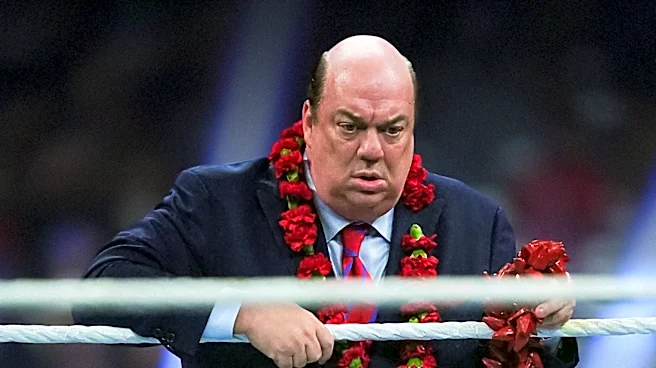
Paul Heyman played a pivotal role in the transformation of Eastern Championship Wrestling (ECW) into Extreme Championship Wrestling in August 1994. This change occurred after Shane Douglas, who had just won the NWA Worlds Heavyweight Championship, publicly
denounced the title and the National Wrestling Alliance (NWA). This act, which was a pre-planned double-cross rather than a spontaneous angle, led to Tod Gordon and Eastern Championship Wrestling breaking away from the NWA. Heyman subsequently took on creative duties and eventually managed the full operations of the business until its bankruptcy in April 2001. The event was designed to give Douglas credibility and establish ECW as a renegade promotion with an 'in-your-face' mindset, resonating with its core audience in Philadelphia. The move was a strategic decision to expand ECW's reach beyond the local area and establish its own identity, distinct from the traditional NWA.
Why It's Important?
This event is significant for its impact on the landscape of professional wrestling in the U.S. The strategic move orchestrated by Paul Heyman and Tod Gordon allowed ECW to carve out a unique niche in the industry, emphasizing a more extreme and rebellious style of wrestling. This departure from traditional wrestling norms attracted a dedicated fanbase and influenced future wrestling promotions. The public denouncement of the NWA title by Shane Douglas, under Heyman's creative direction, was a bold statement that challenged the established order and helped define ECW's identity. This shift not only elevated ECW's profile but also demonstrated the power of creative storytelling and strategic branding in professional sports entertainment. The success of ECW, even for a limited period, proved that there was a market for a more edgy and unconventional product, impacting how other promotions approached their content and audience engagement.
What's Next?
While the immediate 'What's Next' for ECW as a standalone entity concluded with its bankruptcy in 2001, the legacy of Paul Heyman's creative direction and ECW's 'extreme' philosophy continues to influence professional wrestling. The style and storytelling elements pioneered by ECW have been adopted and adapted by larger promotions, including WWE, where Heyman himself has held significant roles. The impact of ECW's approach to character development, match intensity, and audience interaction can still be seen in contemporary wrestling programming. Future developments in wrestling will likely continue to draw inspiration from the innovative and boundary-pushing concepts that Heyman helped establish during his tenure at ECW, ensuring that the spirit of 'extreme' wrestling remains a part of the industry's evolution.
Beyond the Headlines
The transformation of ECW under Paul Heyman's guidance represents a deeper cultural shift within professional wrestling, moving away from a more family-friendly, traditional sports entertainment model towards a grittier, more adult-oriented product. This shift reflected broader societal trends of the 1990s, where counter-culture and anti-establishment sentiments gained traction. ECW's success in cultivating a loyal, passionate fanbase by embracing a 'renegade' image highlights the importance of authenticity and niche marketing in entertainment. The ethical implications of the 'double-cross' on the NWA, while controversial, also underscore the theatrical nature of professional wrestling, where blurring the lines between reality and storyline can generate significant interest and engagement. This period also showcased Heyman's acumen as a promoter and creative force, demonstrating how a clear vision and strategic risk-taking can disrupt an established industry.