






What's Happening?
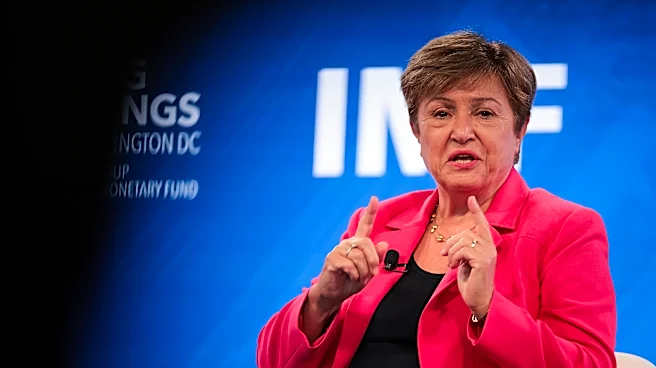
Kristalina Georgieva, Managing Director of the International Monetary Fund (IMF), urged countries to rapidly prepare their digital infrastructure, labor markets, and workforces for the advent of artificial intelligence (AI). Speaking at the Asia-Pacific
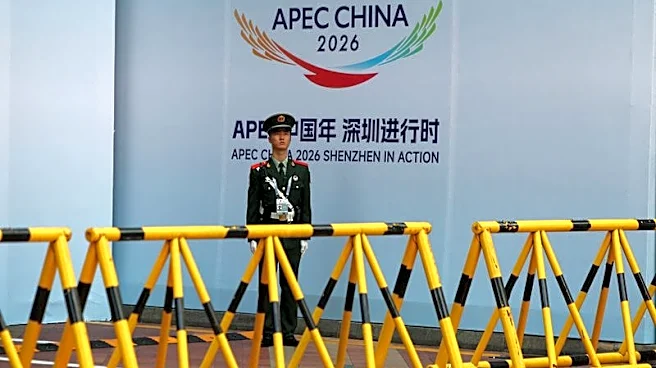
Economic Cooperation (APEC) leaders’ summit in Shenzhen, China, Georgieva emphasized that humanity is facing the fastest transformation in its history. She highlighted the necessity for nations to proactively address the risks associated with AI, particularly concerning financial stability and cybersecurity. According to Georgieva, 2026 marks the first year where AI has had a tangible impact on global growth, serving as a counterbalance to the effects of the Middle East conflict on energy supplies. She asserted that while energy crises are temporary, AI is a permanent fixture that will become the most significant factor for competitiveness, productivity, and growth in the medium term.
Why It's Important?
The IMF Managing Director's call underscores the profound and irreversible impact artificial intelligence is expected to have on global economies and societies. Her remarks at APEC highlight a critical need for governments and businesses worldwide, including the U.S., to develop comprehensive strategies to adapt to the AI revolution. Failure to prepare could lead to significant economic disruptions, including job displacement, increased inequality, and potential financial instability if cybersecurity risks are not adequately managed. For the U.S., a leader in AI development, this means not only fostering innovation but also investing in workforce retraining, updating regulatory frameworks, and strengthening digital infrastructure to maintain its competitive edge and mitigate potential societal challenges. The emphasis on AI as a key driver of productivity and growth suggests that nations that effectively integrate AI will likely see substantial economic benefits, while those that lag may face stagnation.
What's Next?
Following the IMF's strong recommendation, countries are expected to accelerate their efforts in developing national AI strategies. This will likely involve increased investment in digital infrastructure, including high-speed internet and data centers, to support AI technologies. Governments will also need to focus on reforming labor markets through education and training programs to equip workers with the skills necessary for an AI-driven economy. Policymakers will face the challenge of creating regulatory frameworks that foster AI innovation while addressing ethical concerns, data privacy, and potential monopolistic practices. International cooperation, particularly among APEC members and other global economic powers, may also increase to establish common standards for AI development and deployment, as well as to address cross-border cybersecurity threats. The integration of AI into various sectors will continue to evolve, necessitating ongoing adaptation and policy adjustments.
Beyond the Headlines
The rapid advancement of artificial intelligence presents not only economic opportunities but also profound ethical, social, and geopolitical implications. Beyond the immediate concerns of job displacement and economic growth, AI raises fundamental questions about the future of work, human-machine interaction, and the distribution of wealth and power. The call for preparedness by the IMF hints at a potential widening of the global economic divide between nations that successfully harness AI and those that do not. Furthermore, the dual-use nature of AI technology poses significant national security challenges, including the potential for autonomous weapons systems and sophisticated cyber warfare. Addressing these deeper implications will require a multi-faceted approach involving not just governments and businesses, but also academia, civil society, and international organizations to ensure that AI development is guided by principles of fairness, transparency, and human well-being.