






What's Happening?
The U.S. Commerce Department has finalized an award of up to $38 million to Diraq, a quantum computing company, under the CHIPS program. This funding, confirmed six months after an initial promise, is designated for the manufacturing and testing of Diraq's
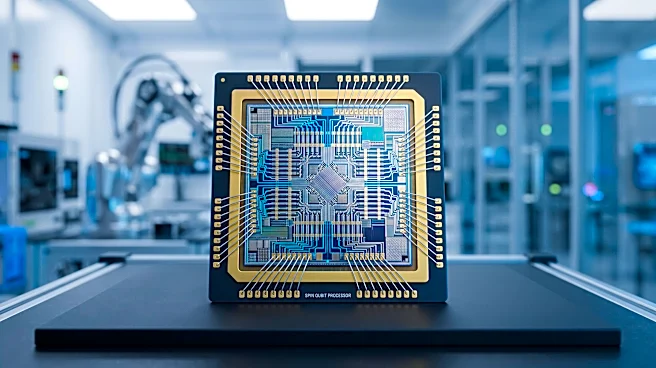
quantum chips on American soil. Additionally, a portion of the award will support the design of large processing units essential for functional quantum computers. Diraq's technology utilizes silicon spin qubits, which are produced using the same processes and materials as conventional computer chips, making them compatible with standard foundries. The company, which originated as a University of New South Wales spinout in Sydney in 2022, has expanded its presence with U.S. sites in Palo Alto, Chicago, Los Angeles, and Albuquerque. This award is part of a larger approximately $2 billion CHIPS Act quantum funding round, which also includes a $100 million commitment to PsiQuantum.
Why It's Important?
This significant investment by the U.S. government into Diraq underscores a strategic effort to bolster domestic quantum computing capabilities and secure a leading position in this emerging technological field. By funding the manufacturing and testing of quantum chips within the U.S., the CHIPS Act aims to reduce reliance on foreign supply chains and foster a robust American quantum technology ecosystem. The development of quantum computing is considered a core technology for the next decade, with potential to revolutionize various sectors, including national security, finance, and scientific research. This award not only supports Diraq's ambitious goal of developing quantum computers with millions of error-corrected qubits by 2031 but also signals the U.S.'s commitment to attracting and retaining cutting-edge technology companies, thereby creating high-skilled jobs and stimulating economic growth in the technology sector. The government's approach of taking small, non-controlling stakes in backed companies suggests a model designed to support innovation while maintaining a degree of oversight.
What's Next?
Diraq plans to use the $38 million award to advance its quantum chip manufacturing and design efforts in the U.S. The company aims to achieve 150,000 physical qubits supporting up to 1,000 error-corrected qubits by 2029, with a long-term goal of millions of qubits by 2031. This development is expected to accelerate the timeline for practical quantum computing applications. Furthermore, Diraq intends to have a silicon spin machine operating within an Equinix data center in Sydney before the end of the year, marking a significant milestone as no such computer has previously run in a commercial facility. The U.S. government's continued investment through programs like the CHIPS Act indicates a sustained focus on quantum technology, potentially leading to further funding opportunities and collaborations for companies demonstrating progress in the field. Other nations and blocs, such as France and the EU, are also increasing their investments in quantum research, suggesting a global race to dominate this critical technology.
Beyond the Headlines
The U.S. government's investment in Diraq highlights a broader geopolitical and economic competition in advanced technology. Quantum computing, with its potential to break current encryption methods and solve complex problems beyond the reach of classical computers, is seen as a critical component of future national security and economic power. The CHIPS Act's focus on domestic production reflects a strategic shift towards technological self-sufficiency and resilience in key sectors. This move could also set a precedent for how governments support and regulate emerging technologies, balancing innovation with national interests. The ethical implications of quantum computing, particularly concerning data security and privacy, will likely become more prominent as the technology matures. The success of Diraq and similar companies could redefine the global technological landscape, creating new industries and potentially disrupting existing ones, while also raising questions about equitable access to such powerful computational capabilities.