
What's Happening?
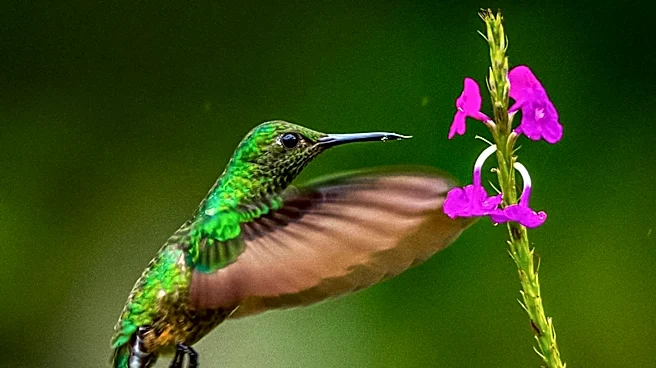
Long-term observation by gardeners has revealed that hummingbirds operate on surprisingly consistent daily schedules and exhibit complex social behaviors, contrary to the common perception of chaotic movement.
Individual hummingbirds maintain predictable routines, visiting feeders at dawn and dusk, resting during mid-morning lulls, and engaging in territorial disputes in the late afternoon. Specific birds even claim particular time slots at feeders. Their movements are not random; they patrol timed routes through gardens, managing nectar resources efficiently. Hummingbirds also display remarkable aggression, engaging in ritualized confrontations ranging from bluffing runs to serious attacks over sugar sources. They possess excellent spatial memory, remembering feeder locations and garden layouts year after year, and can even learn to recognize human routines. Weather significantly influences their behavior, with feeding patterns shifting hours before storms or temperature changes, indicating a high sensitivity to environmental conditions.
Why It's Important?
This detailed understanding of hummingbird behavior challenges simplistic views of wildlife and highlights the intricate ecological dynamics within common backyard environments. Recognizing their precise routines, territoriality, and memory capabilities underscores the importance of thoughtful garden design and feeder management. For instance, proper feeder placement is crucial for their safety, protecting them from predators and ensuring nectar quality. The discovery that hummingbirds rely on insects for protein, not just nectar, emphasizes the need for gardeners to reduce pesticide use and cultivate diverse insect populations to support a complete hummingbird habitat. This deeper insight fosters a more responsible approach to gardening, transforming yards from mere decorations into vital, shared territories that cater to the specific needs and individual personalities of these wild neighbors, ultimately contributing to their survival and well-being.
What's Next?
As gardeners continue to share and document their observations, there is potential for increased public awareness regarding the complex lives of hummingbirds. This could lead to broader adoption of hummingbird-friendly gardening practices, such as planting native, nectar-rich flowers that also support insect populations, strategic feeder placement, and consistent maintenance of sugar water. Further citizen science initiatives could emerge, allowing more individuals to contribute to the understanding of hummingbird migration patterns, individual behaviors, and responses to environmental changes. This ongoing observation may also inform conservation efforts, particularly in urban and suburban areas, by identifying critical habitat needs and behavioral adaptations. The detailed insights gained from long-term watching can help bridge the gap between casual appreciation and scientific understanding, promoting a more nuanced and respectful coexistence with these tiny, yet complex, creatures.
Beyond the Headlines
The revelation of hummingbirds' intricate lives extends beyond ornithology, offering a compelling metaphor for the hidden complexities in seemingly simple natural phenomena. Their precise energy budgeting, territorial negotiations, and memory-driven navigation reflect sophisticated survival strategies in a high-stakes environment. The observation that individual hummingbirds develop distinct 'personalities' and learn human routines suggests a level of cognitive ability often underestimated in small birds. This challenges anthropocentric views of intelligence and social complexity, encouraging a deeper appreciation for the diverse forms of life around us. Furthermore, the shift in perspective from viewing hummingbirds as mere 'garden decorations' to recognizing them as 'wild neighbors' with specific needs and behaviors fosters a more empathetic and engaged relationship with the natural world, prompting individuals to consider their role in supporting local ecosystems rather than merely observing them.