



What's Happening?
Construction has resumed on the Trump Organization-branded golf clubhouse within Indonesia's Lido Special Economic Zone (KEK Lido) in West Java, following a year-long suspension. The Indonesian Ministry of Environment and Forestry had sealed parts of the 1,040-hectare
KEK Lido in February of the previous year, citing concerns over water management and sedimentation in Lido Lake. The halt had raised questions about the future of the KEK Lido project, which is promoted as an entertainment and resort hub less than 60 kilometers from Jakarta. According to CNA, the ministry has since lifted the construction ban. Minister of Environment, Jumhur Hidayat, confirmed that the suspension was a measure to compel the developers to comply with established regulations. He stated that sanctions could be lifted once requirements were met, and indicated that the developers had fulfilled the orders regarding the violations. Officials from the Secretariat General of the National Council for Special Economic Zones also confirmed the lifting of the ban earlier this year. Construction was observed near the operational Trump golf course in May, with staff confirming it was for the Trump clubhouse. The Lido Lake Resort, owned by MNC Hotel, a part of the MNC Group which manages the KEK Lido, is also undergoing expansion.
Why It's Important?
The resumption of construction on the Trump-branded clubhouse in Indonesia highlights the complex interplay between international business interests, environmental regulations, and local economic development. The project, which is part of the larger KEK Lido, is significant as it represents the Trump Organization's first golf property in Asia, aiming to bring its brand standards through world-class facilities. For the MNC Group, led by businessman and politician Hary Tanoesoedibjo, the KEK Lido is a major undertaking designed to be an integrated entertainment hub. The project's success could attract high-spending tourists and elites from Jakarta, given its proximity and new toll road access. However, the initial suspension due to environmental concerns underscores the growing scrutiny on large-scale developments and their ecological impact. The project's ability to balance economic benefits with environmental sustainability and local community welfare will be crucial for its long-term viability, especially in a region where debates about overtourism and environmental protection are increasing, as seen in Bali.
What's Next?
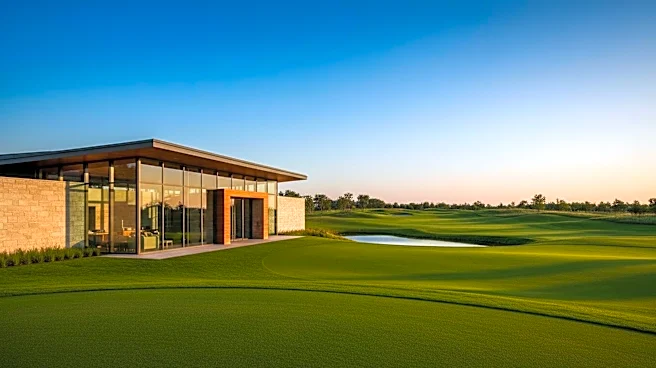
The Trump International Golf Club Lido clubhouse, covering 3.3 hectares, is slated for completion this year. It will feature multiple restaurants, large ballrooms, meeting rooms, and a semi-open ballroom. This clubhouse is part of a broader development within the KEK Lido, which includes an 18-hole golf course already in operation, and plans for a five-star hotel, fitness and wellness centers, and residential units. The project's success will depend on various factors, including its business model, market conditions, and the developer's ability to address social issues. Experts suggest that the KEK Lido has strong potential due to its strategic location near Jakarta and government support in terms of infrastructure and simplified permitting processes. However, the developers will need to consider local culture, national economic stability, and spatial planning regulations. Furthermore, ensuring benefits for the local community and environmental preservation will be critical, especially given past concerns about local employment and the environmental impact of similar projects in Indonesia.
Beyond the Headlines
The KEK Lido project, with its Trump branding, carries significant political sensitivity in Indonesia, as noted by political analysts. While international brands can offer prestige, their success in Indonesia is contingent on adapting to the local context. The experience of a Trump-linked golf resort in Bali, which reportedly ceased operations around the pandemic and has not seen planned renovations, suggests that the Trump brand alone may not guarantee success or enthusiastic reception from the Indonesian public. The project also raises deeper questions about the equitable distribution of benefits from large-scale tourism developments. Concerns from local residents, such as those in Bali who reported not benefiting from previous developments and a lack of local employment, highlight the need for developers to actively engage with and support surrounding communities. The environmental issues that led to the initial suspension also point to the broader challenge of sustainable development in rapidly growing economies, where economic ambitions must be carefully balanced with ecological preservation.