






What's Happening?
Infrared saunas are increasingly being adopted in U.S. homes and wellness facilities due to their unique heating method and associated health benefits. Unlike traditional saunas that heat the air, infrared saunas use infrared radiation to directly warm
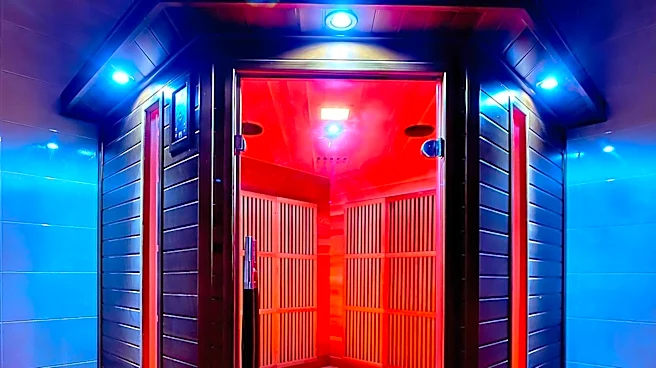
the body and surfaces within the cabin, allowing for cooler ambient air temperatures. These saunas often incorporate full-spectrum infrared rays, combining near, mid, and far infrared wavelengths to ensure even heat distribution. High-end models are designed with low electromagnetic field (EMF) safety, utilizing shielded carbon panels to keep electrical fields below 3 milligauss. They are also noted for their ease of maintenance, operating dry without the need for excess moisture or steam. Many one-person and two-person infrared sauna models can operate on standard 120V household power outlets, making them suitable for indoor installation without extensive rewiring. This accessibility contributes to their growing presence in residential settings and various wellness centers across the country.
Why It's Important?
The rising popularity of infrared saunas signifies a broader trend in the U.S. towards accessible, in-home wellness solutions and integrated recovery services in fitness centers. For consumers, these saunas offer potential benefits such as cardiovascular health improvement, stress relief, pain management, and overall well-being, all within the convenience of their homes or local gyms. The low EMF safety feature addresses growing consumer concerns about electromagnetic radiation exposure, enhancing their appeal. For the wellness and fitness industries, the integration of infrared saunas, alongside other recovery technologies like ice baths and red light therapy, represents an expansion of service offerings beyond traditional exercise. This diversification allows businesses to cater to a holistic view of health, attracting a wider clientele interested in recovery, longevity, and preventative care. The ease of installation for smaller units also opens up new market opportunities for manufacturers and retailers, making advanced wellness technology more attainable for the average American household.
What's Next?
The market for infrared saunas is expected to continue its growth trajectory, with manufacturers likely focusing on further innovations in design, energy efficiency, and smart technology integration. We may see more compact and portable options emerge to cater to urban dwellers and those with limited space. Fitness centers and wellness studios are likely to further expand their recovery suites, making infrared saunas a standard offering alongside other modalities. This trend could lead to increased competition among providers, potentially driving down costs and making these services even more accessible. Additionally, as more research emerges on the specific health benefits of infrared therapy, there could be a push for greater integration into therapeutic and medical settings, potentially leading to insurance coverage or physician recommendations for certain conditions. The emphasis on low EMF technology will also likely become a standard expectation, influencing product development and consumer choice.
Beyond the Headlines
The widespread adoption of infrared saunas reflects a deeper cultural shift in the U.S. towards proactive health management and self-care. Consumers are increasingly seeking ways to enhance their well-being outside of traditional medical interventions, embracing technologies that offer both relaxation and perceived health benefits. This trend highlights a growing awareness of the interconnectedness of physical and mental health, with individuals investing in tools that support both. The emphasis on 'low EMF' also points to a broader societal concern about environmental factors and their impact on health, driving demand for products that are not only effective but also perceived as safe. As these technologies become more commonplace, they could influence architectural design in homes and commercial spaces, with dedicated wellness areas becoming a standard feature. This evolution could also spark further innovation in personalized wellness, where technology adapts to individual health needs and preferences, moving beyond a one-size-fits-all approach to health and recovery.