

What's Happening?
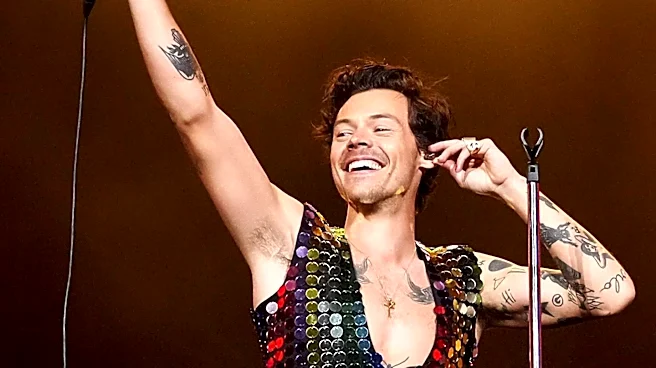
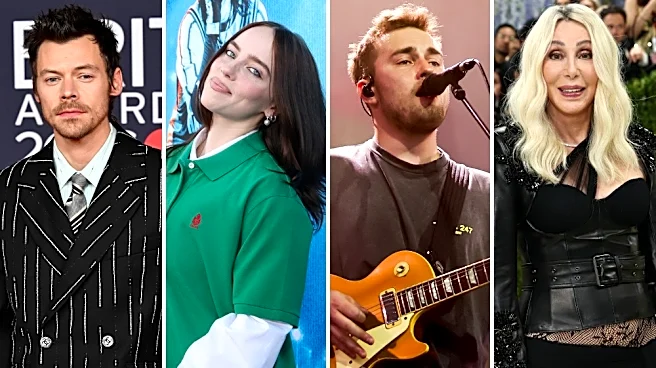
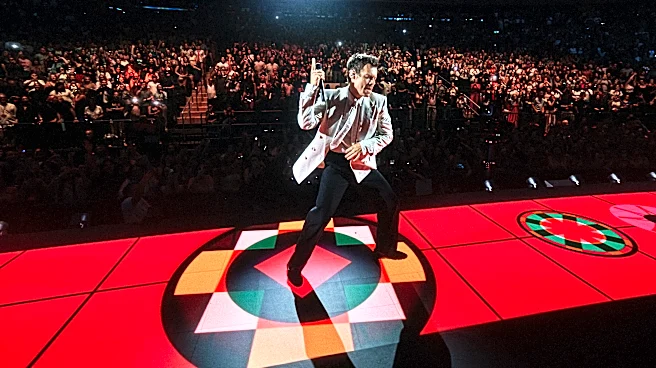
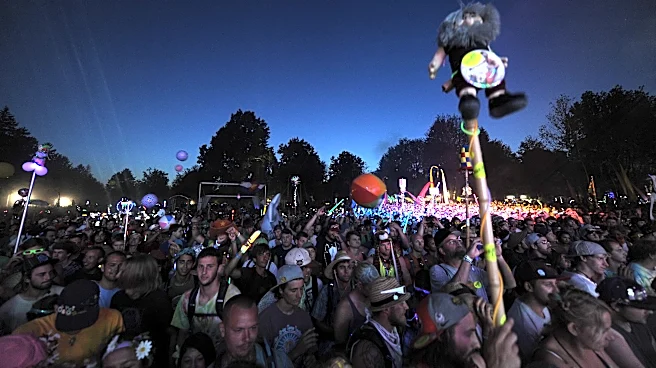
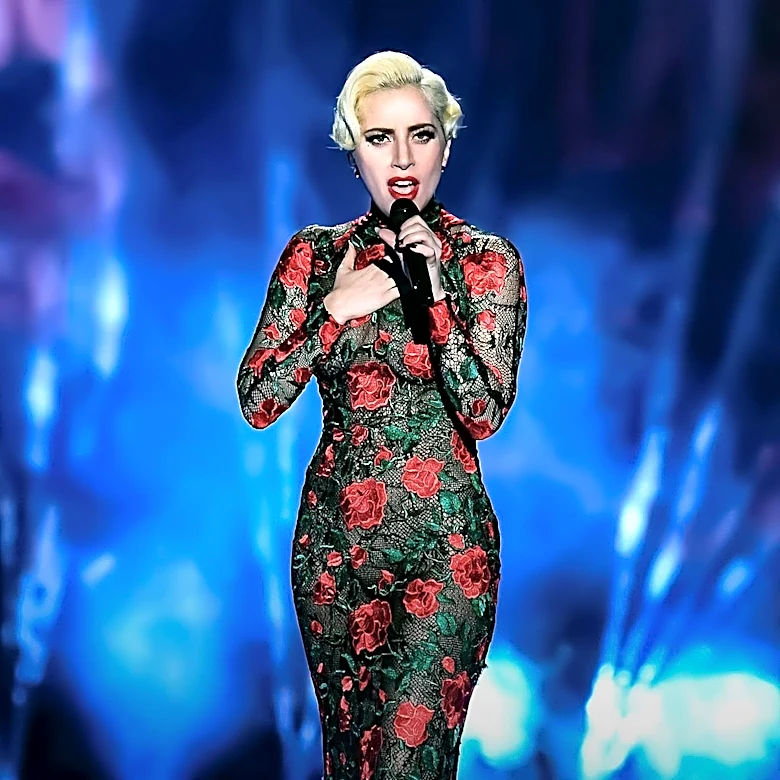
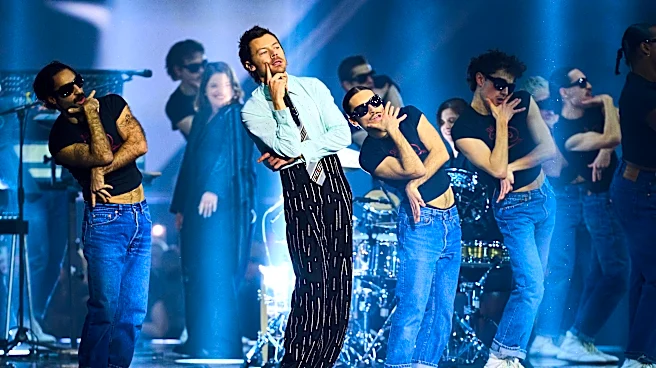
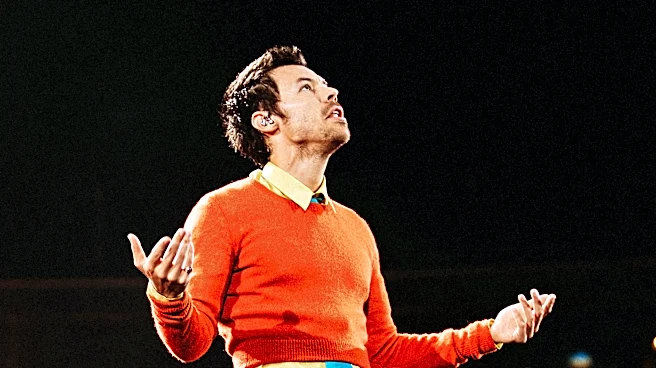
The iconic Glastonbury Festival has unveiled its 2027 lineup, featuring Harry Styles, Billie Eilish, Sam Fender, and veteran star Cher as headliners. Tickets for the event, scheduled from June 23 to 27, sold out in 45 minutes last month despite a price
tag of £408 ($539). Cher, who will be 81 at the time of her performance, is set to become the oldest artist to take the Legends slot. The festival, held at Worthy Farm in southwest England, has a rich history dating back to 1970. The 2025 festival, attended by approximately 210,000 people, faced controversy when two acts, Irish rappers Kneecap and London-based duo Bob Vylan, offered messages of support for Palestinians in Gaza. Police investigated comments made on stage but ultimately took no action. Frontman Bobby Vylan's chants against the Israeli army sparked a backlash against the BBC for its live broadcast.
Why It's Important?
The announcement of Glastonbury's 2027 lineup highlights the festival's continued global appeal and its ability to attract top-tier musical talent, from contemporary pop stars to legendary artists. The rapid sell-out of tickets underscores the high demand for live music experiences and the festival's significant economic impact on the region. However, the controversy surrounding the 2025 festival's on-stage political statements reflects a broader trend of cultural events becoming platforms for social and political activism. This can lead to debates about artistic freedom versus potential offense, and the role of organizers in managing such expressions. The backlash against the BBC for broadcasting the pro-Palestinian chants also illustrates the challenges media outlets face in covering live events that feature politically charged content, particularly in sensitive geopolitical contexts. This situation can impact public perception of both the festival and the broadcasters involved.
What's Next?
The Glastonbury Festival will proceed with its 2027 event from June 23 to 27, featuring its announced headliners and additional acts yet to be revealed. Organizers will likely continue to navigate the balance between providing a platform for diverse artistic expression and managing potential political controversies, especially given the precedent set in 2025. Future festivals may see increased scrutiny regarding political messaging from performers, potentially leading to more explicit guidelines or responses from organizers and broadcasters. The financial success of the festival, evidenced by the quick ticket sales, suggests its continued prominence in the international music calendar, but its cultural impact will also be shaped by how it addresses and responds to social and political issues that arise during its events.
Beyond the Headlines
The Glastonbury Festival's history as a hub for counterculture and social commentary means that political expressions on its stages are not new. However, the specific nature of the 2025 controversy, involving the Israeli-Palestinian conflict, touches upon deeply sensitive international issues. This incident underscores the increasing interconnectedness of global events and cultural platforms, where artists and audiences alike use such stages to voice opinions on geopolitical matters. The debate over whether such events should remain apolitical or embrace their role as forums for social discourse is ongoing. This situation also raises questions about the responsibilities of cultural institutions and media organizations in curating and broadcasting content that may be perceived as controversial or divisive, and how these decisions can influence public opinion and engagement.