






What's Happening?
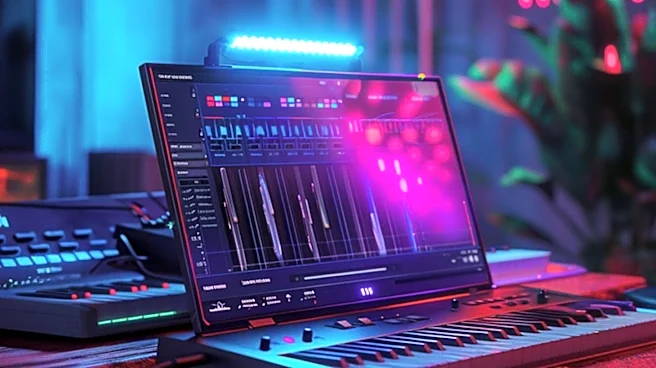
A new unofficial project named 'open-field,' developed by Parisian musician Maxime B (LaP0573) and collaborators, is providing a substantial feature boost for the Teenage Engineering OP-1 Field synthesizer. This project allows users to add numerous unofficial extensions
to their OP-1 Field's existing firmware, rather than replacing it entirely. Users can copy individual feature files, referred to as 'packs,' onto their device, which then become active upon the next startup. These enhancements include expanding the tape deck to eight tracks, introducing new sound engines like granular sample synths, analog-style synths, and wavetable synths, and adding a variety of effects such as stereo resonators and granular delays. The project also brings new tools like a chord player, MIDI sequencers, VU meters, and additional LFOs. The process requires an OP-1 Field running original OS 1.7.3 and bootloader 1000.1.1 or 1000.2.0, and users proceed at their own risk.
Why It's Important?
This development is highly significant for the Teenage Engineering OP-1 Field user community and the broader music technology landscape. It effectively transforms the OP-1 Field into a much more powerful and versatile instrument, addressing potential feature gaps that users may have desired. By offering unofficial firmware extensions, the project empowers users to customize their devices beyond manufacturer specifications, fostering a more engaged and innovative user base. This community-driven enhancement can extend the lifespan and utility of the OP-1 Field, potentially increasing its appeal to new users who might have been deterred by its original feature set or price point. It also highlights the growing trend of user-led modifications in high-end electronic instruments, pushing the boundaries of what is officially supported.
What's Next?
The 'open-field' project is currently available on its workshop website, allowing OP-1 Field users to immediately access and install these unofficial feature packs. As with any unofficial modification, users will need to weigh the benefits of new features against the inherent risks, such as potential warranty voidance or unforeseen software instabilities. The project's ongoing development may see further enhancements and bug fixes, driven by community feedback and contributions. The success and adoption of 'open-field' could also influence Teenage Engineering's future product development, potentially inspiring official updates or new product lines that incorporate similar functionalities. The community's engagement with this project will likely determine its long-term impact and evolution.
Beyond the Headlines
The emergence of the 'open-field' project for the Teenage Engineering OP-1 Field underscores a fascinating dynamic between manufacturers and their user communities in the tech world. While manufacturers design and release products, passionate users often push the boundaries of what those products can do, sometimes through unofficial means. This phenomenon raises questions about intellectual property, product ownership, and the right to modify purchased hardware. It also highlights the power of open-source principles and collaborative development, even in contexts where official support is absent. For Teenage Engineering, this unofficial enhancement could be a double-edged sword: it demonstrates the deep engagement and loyalty of its user base, but also presents challenges regarding quality control, support, and potential competition from community-driven innovation. This trend could signal a future where hardware platforms become more open to user modification, blurring the lines between consumer and developer.