


What's Happening?
Mompox, a historic town located on Colombia's Magdalena River, is gaining recognition as a significant tourist destination in South America. Founded in 1537 by Spanish conquistadors, Mompox was once a major trading hub, enriched by Colombia's gold and
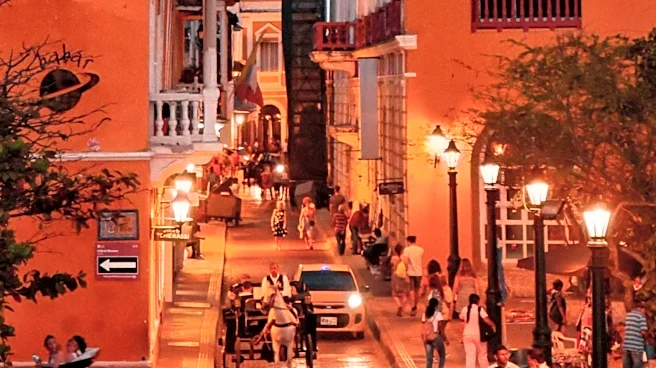
silver mines. Despite its modest size and a population of fewer than 50,000, the town's unique charm and historical significance are drawing increasing attention. The town is a UNESCO World Heritage Site, known for its well-preserved colonial architecture, whimsical church spires, and vibrant cultural traditions. Recent visits by cruise ships, such as the AmaMelodia, are bringing international passengers to experience Mompox's 'magical realism,' a term often associated with Nobel-winning novelist Gabriel Jose Garcia Marquez, who drew inspiration from similar Colombian settings.
Why It's Important?
The rise of Mompox as a tourist destination signifies a broader trend in Colombia's post-conflict development, where regions previously less accessible are now opening up to international visitors. This growth in tourism can provide significant economic benefits to local communities, creating jobs and stimulating small businesses in areas like hospitality, crafts, and guided tours. For the U.S. tourism industry, this presents new opportunities for travel agencies and tour operators specializing in South American itineraries. The increased interest in Colombian cultural heritage also contributes to a more nuanced international perception of the country, moving beyond past narratives of conflict to highlight its rich history and natural beauty. This shift can foster stronger cultural ties and economic partnerships between the U.S. and Colombia.
What's Next?
As Mompox continues to attract more tourists, there will likely be further development in its tourism infrastructure, including more accommodations, dining options, and organized tours. The town's annual jazz festival, which draws crowds and enlivens the streets, could see increased international participation and promotion. Cruise lines are expected to expand their offerings along the Magdalena River, making Mompox a regular stop on their itineraries. Local authorities and tourism boards will likely focus on sustainable tourism practices to preserve the town's historical integrity and natural environment while accommodating growth. This could also lead to increased investment in regional transportation and services to support the influx of visitors.
Beyond the Headlines
The growing popularity of Mompox highlights the enduring appeal of 'magical realism' and its connection to Colombian identity. The town's ability to transport visitors to another era, with its preserved colonial architecture and unique cultural rhythms, offers a profound experience that transcends typical tourism. This development also underscores the potential for cultural heritage to drive economic revitalization in regions that have historically been overlooked. The narrative of Mompox, a town 'trapped in time' yet now a 'rising star,' reflects a broader human desire for authentic, immersive travel experiences that connect visitors with history and local traditions. This trend could inspire other historical sites in the U.S. and globally to leverage their unique cultural assets for sustainable development.