

What's Happening?
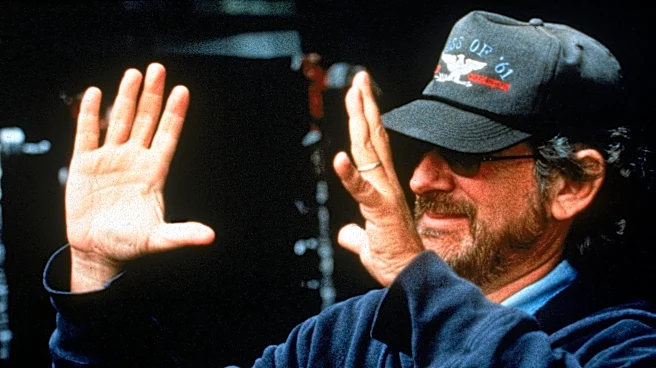
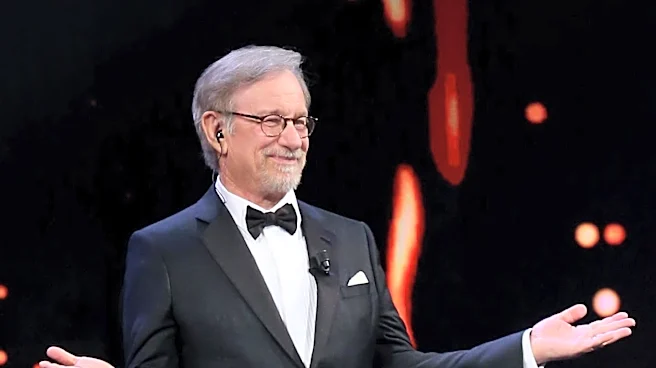
Steven Spielberg, a prominent figure in Hollywood, has voiced a cautious stance regarding the use of artificial intelligence (AI) in creative professions. During South by Southwest in March 2026, Spielberg acknowledged the utility of AI in various fields
but explicitly stated his unwillingness to employ it to replace creative professionals. This position aligns with other notable directors like Christopher Nolan, who has observed audience dissatisfaction with AI-generated content, and Guillermo del Toro, who has declared he will not use generative AI in his films. This sentiment reflects a broader debate within the film industry about balancing technological advancement with the preservation of human artistry and employment. The discussion extends to concerns about AI's ability to replicate an artist's unique style and the potential for such technology to devalue human contributions.
Why It's Important?
Spielberg's cautious approach to AI in creative roles is significant because it highlights a growing concern within the U.S. entertainment industry about the impact of advanced technology on human jobs and artistic integrity. As AI capabilities expand, particularly in generating visual content and replicating human performances, the livelihoods of actors, writers, and other creative professionals are perceived to be at risk. This stance from a highly influential director like Spielberg can influence industry practices and policy discussions, potentially leading to stronger protections for human artists. The debate also touches upon the ethical implications of AI, such as the unauthorized replication of an artist's identity or style, and the potential for AI to standardize creative output, diminishing originality and emotional depth. The economic implications are substantial, as widespread AI adoption could lead to job displacement and a shift in how creative work is valued and compensated.
What's Next?
The ongoing dialogue about AI in Hollywood is expected to continue shaping industry standards and potentially lead to new agreements between studios and creative guilds. The SAG-AFTRA union, for instance, has already ratified an agreement with major film and television companies that includes provisions for digital replicas and synthetic performers, requiring communication and negotiation when AI is used in roles typically filled by humans. This indicates a trend towards establishing frameworks that allow for technological innovation while safeguarding human employment and artistic rights. Future developments may include more comprehensive ethical codes, similar to the one announced at BAIFF, aimed at guiding human-AI collaboration in the arts. The industry will likely see continued experimentation with AI for specific tasks, such as pre-visualization and post-production, but with increased scrutiny on its use in replacing core creative functions.
Beyond the Headlines
Beyond the immediate concerns of job displacement and intellectual property, the debate surrounding AI in filmmaking delves into fundamental questions about the nature of creativity and human expression. The concept of a 'right to human irregularity,' as proposed in some ethical codes, underscores the value of imperfection and spontaneity in art, qualities that AI currently struggles to replicate authentically. This suggests a deeper cultural shift where the unique, often unpredictable, elements of human performance are increasingly recognized as essential to artistic value. The discussion also raises questions about authorship in an AI-assisted creative process: who is the artist when an AI generates content based on human prompts? This could lead to new legal and philosophical interpretations of copyright and creative ownership, challenging traditional notions of artistic creation and potentially redefining the relationship between humans and technology in the arts.