




What's Happening?
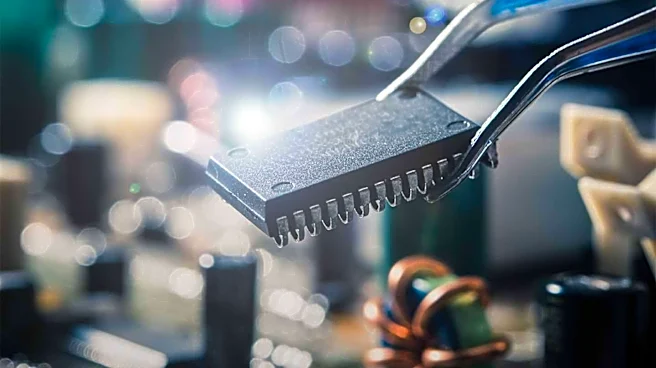
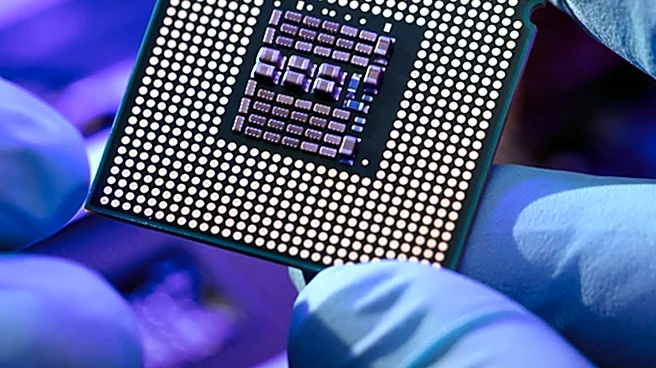
Infineon Technologies AG, a global semiconductor company, is highlighting its commitment to quality management through worldwide certifications, including ISO 9001 and IATF 16949. These certifications are crucial for gaining market access in regulated
industries, particularly for complex products where the consequences of errors are significant. The company asserts that these standards ensure documented processes, external audits, and consistent quality, rather than dictating product design. Infineon's approach includes a robust change-management process to evaluate modifications to products or production methods across functions, ensuring compliance with various standards and customer-specific contracts. This systematic approach aims to deliver reproducible results independently of individual employees, fostering reliability and trust in its semiconductor solutions for sectors like automotive, green industrial power, and connected secure systems. The company's adherence to these certifications is a key factor in its ability to operate and compete in demanding global markets.
Why It's Important?
For U.S. industries, particularly those reliant on advanced semiconductor components such as automotive manufacturing, renewable energy infrastructure, and secure IoT devices, Infineon's emphasis on global quality certifications is paramount. These certifications act as a critical gatekeeper, ensuring that components integrated into U.S. products meet stringent reliability and safety standards. This is vital for maintaining product quality, reducing recall risks, and safeguarding consumer trust in sectors where component failure can have severe consequences. U.S. companies sourcing from Infineon benefit from the assurance that their supply chain partners adhere to internationally recognized quality benchmarks, which can streamline procurement processes and reduce the need for extensive in-house auditing. Furthermore, in a competitive global market, these certifications can influence purchasing decisions, as U.S. manufacturers often prioritize suppliers with proven quality management systems to mitigate operational risks and comply with their own regulatory requirements. The consistent application of these standards across Infineon's global operations, including its significant U.S. presence, directly impacts the integrity and performance of American-made products incorporating their technology.
What's Next?
Infineon Technologies AG is expected to continue its rigorous adherence to and pursuit of global quality certifications, adapting to evolving industry standards and customer demands. The company's ongoing commitment to certifications like ISO 9001 and IATF 16949 will likely involve regular external audits and re-certifications to maintain its market access and competitive edge. As industries like automotive and IoT become increasingly complex and interconnected, the need for robust quality management systems will only intensify. Infineon will likely invest further in its change-management processes and internal controls to ensure that any modifications to products or production methods are thoroughly evaluated and compliant. This continuous improvement cycle will be essential for the company to meet the future demands of its U.S. and international clients, who will increasingly rely on certified suppliers to manage risks and ensure the reliability of their own end products. The company's U.S. operations, including its engineering and marketing teams, will play a crucial role in translating these global quality standards into localized customer solutions and support.
Beyond the Headlines
Beyond the immediate implications of market access and product reliability, Infineon's focus on comprehensive quality management systems reflects a broader industry trend towards standardization and accountability in the global supply chain. In an era of increasing technological complexity and interconnectedness, the 'invisible rules' of documented processes and certifications are becoming as critical as the innovation itself. This emphasis on process integrity highlights a shift from merely producing advanced technology to ensuring its consistent and reliable production under controlled conditions. For the U.S., this trend underscores the importance of supply chain resilience and the need for robust frameworks to evaluate and trust international partners. It also raises ethical considerations regarding corporate responsibility in preventing failures that could have widespread societal impacts, particularly in safety-critical applications like autonomous vehicles. The long-term implication is a global manufacturing landscape where verifiable processes and transparent quality assurance are non-negotiable, shaping not only business relationships but also consumer expectations for product safety and performance.