




What's Happening?
Despite recent advancements in the scale of compressed-gas energy storage demonstrators, the economic viability of these technologies remains a significant challenge. While projects like China's 600 MW / 2.4 GWh Huai’an compressed-air demonstration, Hydrostor's
500 MW / 4 GWh Willow Rock project, and Highview Power's 50 MW / 300 MWh liquid-air plant have moved beyond laboratory rigs, they have not yet proven compelling economics compared to established alternatives. Michael Barnard, Chief Strategist at TFIE Strategy, notes that while these larger demonstrators provide valuable engineering experience, they do not inherently demonstrate that compressed-gas storage is the preferred option for grid operators when batteries or pumped hydro are available. The inherent complexities of compressing, cooling, storing, and expanding gases, even with innovations like Energy Dome's CO2-based system, contribute to high capital costs and lower round-trip efficiencies compared to mature storage solutions.
Why It's Important?
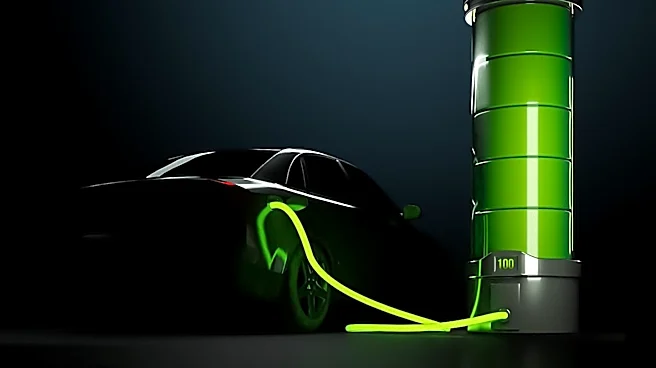
The economic performance of energy storage technologies is critical for the U.S. energy transition and grid stability. The continued struggle of compressed-gas storage to achieve competitive economics means that grid operators and investors may continue to favor more proven and cost-effective solutions like pumped hydro and battery energy storage systems (BESS). The IEA reports that average global BESS prices in 2025 had fallen to one-third of their 2020 level, highlighting the rapid cost reduction and scalability of battery technology. This disparity in economic performance could slow the adoption of compressed-gas solutions, potentially limiting diversification in energy storage options. While compressed-gas storage might find niche applications in specific geographical locations or industrial contexts, its broader impact on the U.S. energy landscape will be constrained without significant improvements in cost-effectiveness and efficiency.
What's Next?
The future of compressed-gas energy storage will likely involve continued research and development to improve efficiency and reduce costs. While current demonstrators are providing valuable data, the industry needs to move beyond first-of-a-kind projects to demonstrate repeatable, commercially competitive solutions. This will require addressing the high capital costs associated with civil engineering, complex machinery, and site-specific construction. The focus may shift towards integrating these systems with existing industrial processes that can provide waste heat or cold, thereby improving their overall efficiency and economic rationale. However, without a clear path to achieving cost parity or superior performance compared to batteries and pumped hydro, compressed-gas storage is expected to remain a niche player in the U.S. energy storage market, with its widespread adoption contingent on significant technological and economic breakthroughs.
Beyond the Headlines
The challenges faced by compressed-gas storage technologies highlight a broader issue in the energy transition: the difficulty of scaling up complex infrastructure projects compared to manufacturing-driven solutions. While battery technology benefits from mass production and continuous innovation in cell chemistry and manufacturing processes, compressed-gas systems often involve extensive civil engineering, custom components, and site-specific construction, which do not lend themselves to the same rapid cost reductions. This distinction underscores the importance of evaluating energy technologies not just on their technical merits but also on their scalability, manufacturing potential, and long-term economic trajectory. The ongoing competition between different energy storage methods will shape the future of grid resilience and renewable energy integration, influencing investment decisions and policy support for various technologies in the U.S.